
Sump Pump Repair in Marietta, GA
Sump pump repair in Marietta, GA is the diagnosis, repair and replacement of the pump that removes groundwater from a basement or crawl space sump pit. Plumber Marietta GA repairs sump pumps, replaces failed units and installs backup pumps across Marietta and Cobb County. Call (770) 230-0611.
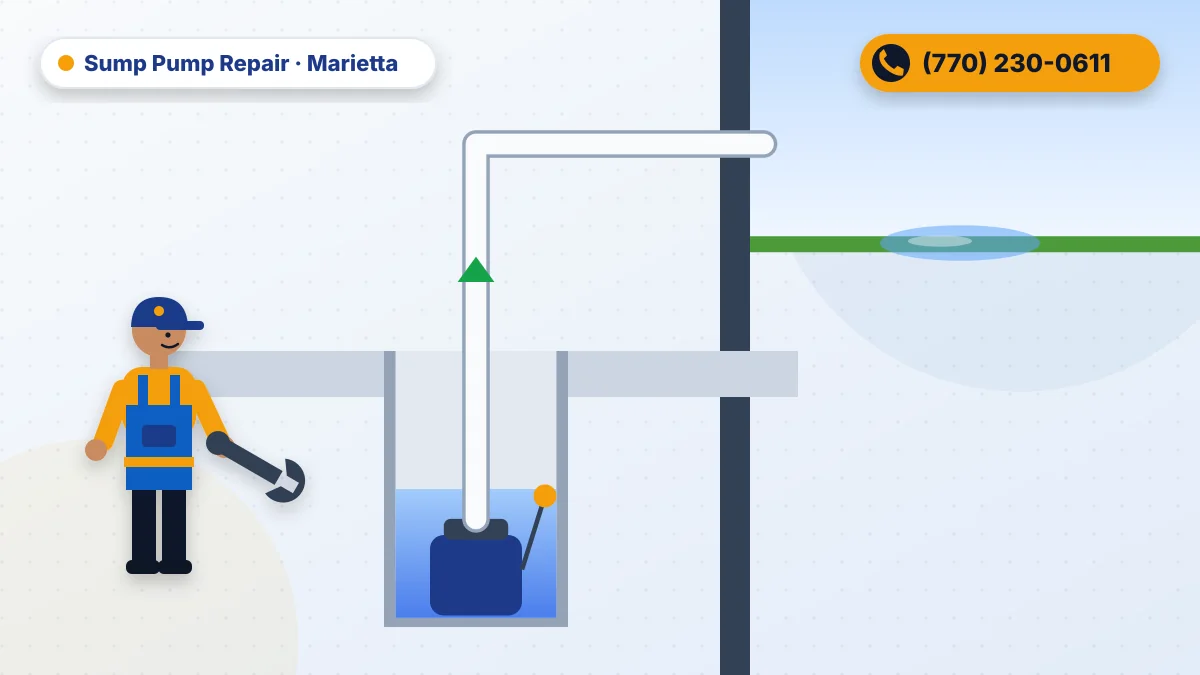
Sump pump service is part of our licensed Marietta plumber services. A working pump keeps heavy rain out of the home’s lowest level.
What Is a Sump Pump?
A sump pump is an electric pump in a pit at the lowest point of a basement or crawl space. It pumps collected groundwater out and away from the home. A float switch turns the pump on when water rises in the pit.
Homes use 1 of 2 pump types:
| Type | Design | Strengths |
|---|---|---|
| Submersible | Pump and motor sit inside the pit | Quieter, handles more water |
| Pedestal | Motor sits on a column above the pit | Easier to service, motor stays dry |
What Are the Signs of a Failing Sump Pump?
A failing sump pump runs nonstop, cycles on and off too often, makes grinding noises, or leaves water standing in the pit. These 6 signs call for repair:
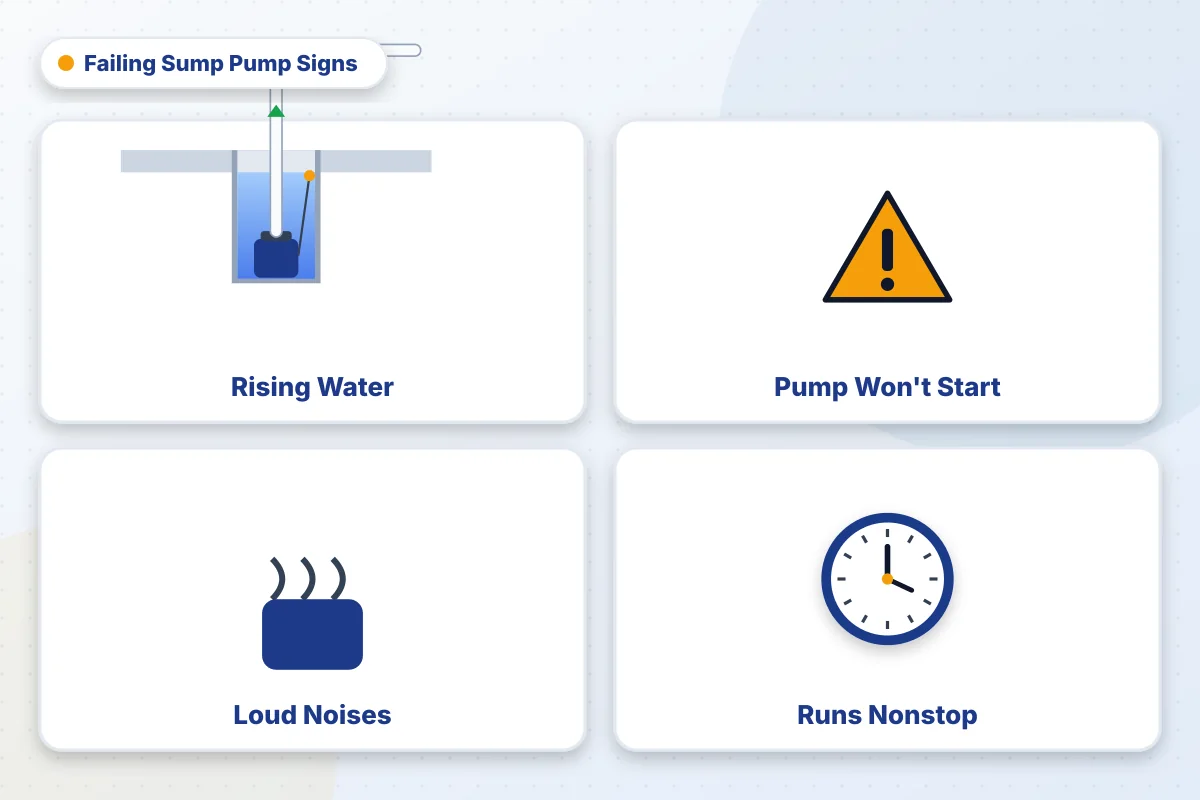
- Water stays in the pit after rain.
- The pump hums but does not move water.
- The pump turns on and off every few seconds, called short cycling.
- The pump runs without stopping.
- Grinding, rattling or vibrating noises come from the pit.
- Rust, corrosion or a burning smell appears at the pump.
Water rising into the basement or crawl space needs an emergency plumber in Marietta.
What Causes Sump Pump Failure?
A stuck float switch, a failed check valve, a clogged intake, a power loss and a worn motor cause most sump pump failures. Each cause has a specific fix.
| Cause | What happens | Fix |
|---|---|---|
| Stuck float switch | Pump never starts or never stops | Free or replace the switch |
| Failed check valve | Water flows back into the pit and the pump short cycles | Replace the check valve |
| Clogged intake or impeller | Pump runs but moves little water | Clean the pit and the intake |
| Power loss | Pump stops during storms | Add a battery backup pump |
| Worn motor | Pump hums, overheats or trips the breaker | Replace the pump |
A check valve is a one-way valve on the discharge pipe. North Dakota State University Extension explains that a check valve stops water from flowing back into the sump after the pump shuts off. Without it, the pump cycles more often, which shortens its life.
How Do You Test a Sump Pump?
Test a sump pump by slowly pouring about 5 gallons of water into the pit and watching the pump start, empty the pit and shut off. North Dakota State University Extension recommends this test.

- Confirm the pump is plugged in and the discharge pipe is clear.
- Pour water slowly into the pit until the float rises.
- Watch the pump start and lower the water level.
- Confirm the pump shuts off and no water flows back into the pit.
A pump that hums without pumping, runs dry, or lets water flow back into the pit needs repair. The International Association of Certified Home Inspectors (InterNACHI) recommends a professional sump pump inspection once a year.
Do You Repair or Replace a Sump Pump?
Repair a sump pump when a single part fails, such as the float switch or check valve. Replace it when the motor fails or the pump nears the end of its service life. Restoration company Rytech places the average service life of a residential sump pump at 7 to 10 years.
Replacement is the better choice in these 3 cases:
- The motor hums, overheats or trips the breaker.
- The pump is 7 years old or older and needs a major repair.
- The pump cannot keep up with water flow during heavy rain.
Do You Need a Backup Sump Pump?
A backup sump pump keeps water out when the main pump fails or the power goes out, which often happens during the same storm that floods the pit. Homes use 1 of 2 backup types:
- Battery backup pump: a second pump powered by a battery that starts when the main pump stops.
- Water-powered backup pump: a pump driven by municipal water pressure, with no battery to replace.
Heavy rain in Cobb County saturates clay soil, and saturated clay holds water against the foundation. A backup pump protects finished basements and crawl spaces during long storms.
How Do You Maintain a Sump Pump?
Test the pump every few months, clean the pit once a year, and check the discharge line before storm season. These 4 tasks extend pump life:
- Pour water into the pit to test the pump before the rainy season.
- Clean mud and debris from the pit and the pump intake once a year.
- Confirm the discharge pipe drains well away from the foundation.
- Test the battery on a backup pump and replace it on the maker’s schedule.
Water Damage Guides for Marietta Homeowners
Crawl space water also comes from plumbing leaks. Our leak detection service in Marietta finds hidden supply line leaks. Soil movement around the foundation is covered in Red Clay Soil and Sewer Line Problems in Cobb County.
Frequently Asked Questions
How long does a sump pump last?
A residential sump pump lasts 7 to 10 years on average, according to restoration company Rytech. Regular testing and pit cleaning extend its life.
Why does my sump pump keep turning on and off?
A sump pump short cycles because of a failed check valve, a stuck float switch, or a pit that is too small. A failed check valve lets water flow back into the pit after each cycle.
How do I test my sump pump?
Pour about 5 gallons of water slowly into the pit and confirm the pump starts, empties the pit and shuts off, as North Dakota State University Extension recommends.
Does a sump pump work during a power outage?
No. A standard electric sump pump stops when the power goes out. A battery backup or water-powered backup pump keeps working.
Can you install a sump pump in a crawl space?
Yes. Plumbers install sump pits and pumps in crawl spaces that collect groundwater after heavy rain.
Book Sump Pump Repair in Marietta, GA
Water in the pit or a pump that never stops? Call (770) 230-0611. Plumber Marietta GA repairs and installs sump pumps across Marietta, East Cobb, Kennesaw, Smyrna, Roswell, Acworth and Vinings.