
Gas Line Plumber in Marietta, GA: Installation, Repair and Hookups
A gas line plumber in Marietta, GA is a licensed plumber who installs, repairs and pressure-tests the natural gas piping that feeds a home’s appliances. Plumber Marietta GA runs new gas lines, repairs leaks and connects gas appliances across Marietta and Cobb County. Call (770) 230-0611.
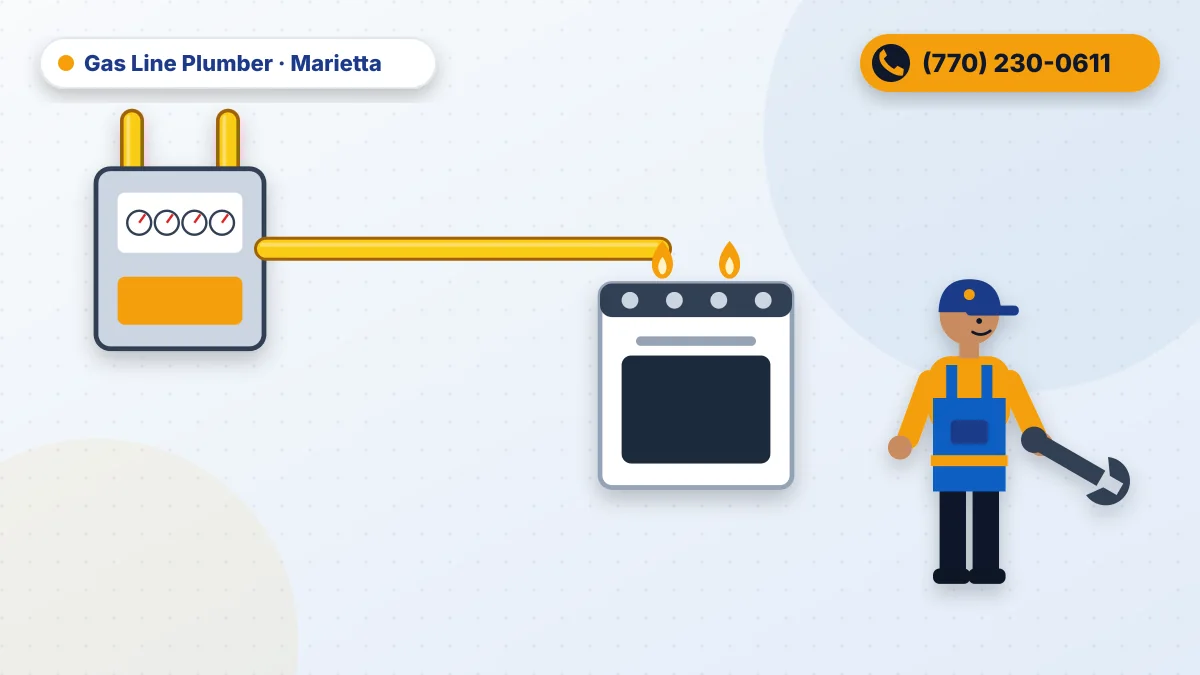
Gas line work is part of our licensed plumbing service in Marietta. Every new or repaired line is pressure-tested before the gas is turned on.
What Do You Do If You Smell Gas?
Leave the building immediately, avoid anything that makes a spark, and call 911 or Atlanta Gas Light at 1-877-427-4321 from a safe place. Atlanta Gas Light adds an odorant called mercaptan to natural gas, which gives it a rotten-egg smell.
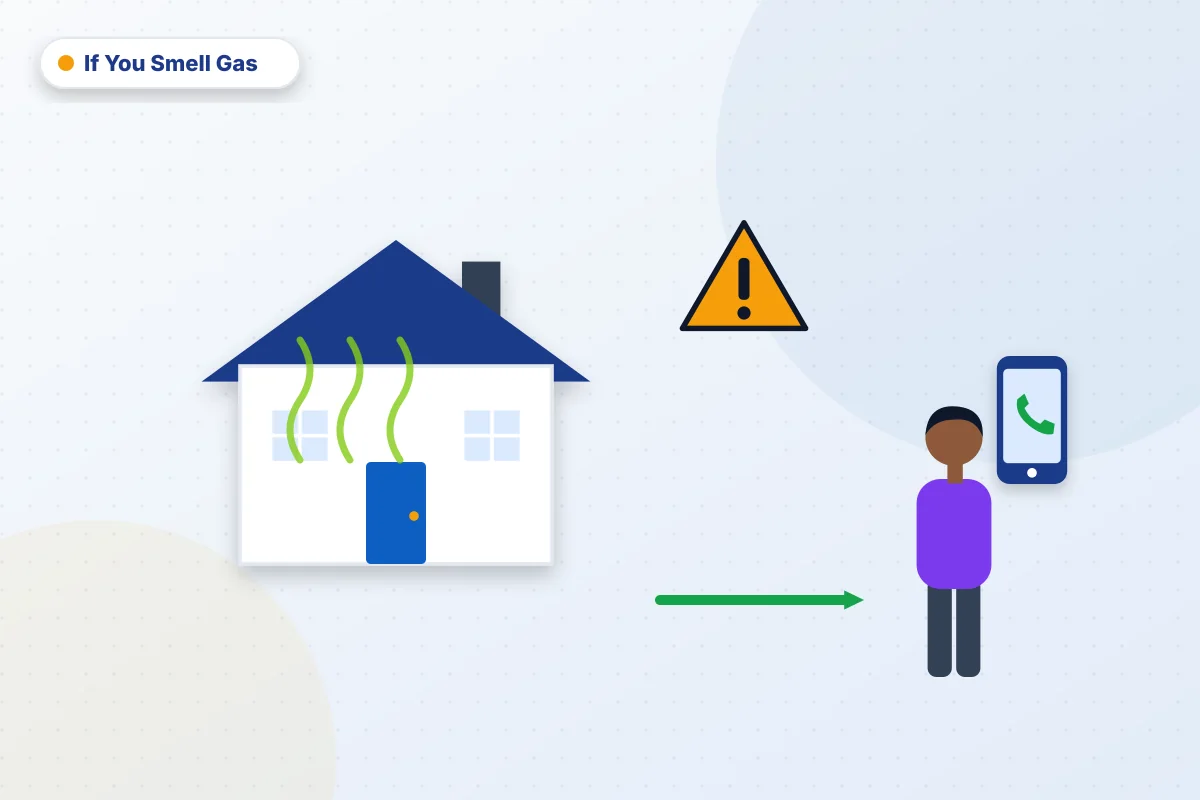
Atlanta Gas Light lists 4 rules for a suspected leak:
- Leave the area immediately.
- Avoid light switches, phones, matches, vehicles and anything that makes a spark near the leak.
- Call 911 or the Atlanta Gas Light 24-hour line at 1-877-427-4321 once you are a safe distance away.
- Never try to find the source of the leak or stop it yourself.
Atlanta Gas Light also lists 3 outdoor signs of an underground gas leak: blowing dirt, discolored vegetation and continued bubbling in standing water.
Call a licensed gas line plumber for repairs after the gas company or fire department declares the area safe. Our emergency plumbers in Marietta respond 24/7.
What Gas Line Services Does a Marietta Plumber Provide?
A Marietta gas line plumber provides 5 core services: new gas line installation, gas leak repair, appliance hookups, gas line replacement and pressure testing.
| Service | What it covers |
|---|---|
| New gas line installation | Running a new branch line to a new appliance or room |
| Gas leak repair | Finding and repairing leaking joints, fittings and pipe |
| Appliance hookups | Connecting ranges, dryers, water heaters, fireplaces, grills and generators |
| Gas line replacement | Replacing corroded or outdated piping |
| Pressure testing | Testing new and repaired lines for leaks before use |
Which Gas Appliances Need a Gas Line Hookup?
Gas ranges, clothes dryers, water heaters, tankless water heaters, furnaces, fireplaces, outdoor grills, standby generators and pool heaters all need a correctly sized gas line. Each appliance has its own gas demand.
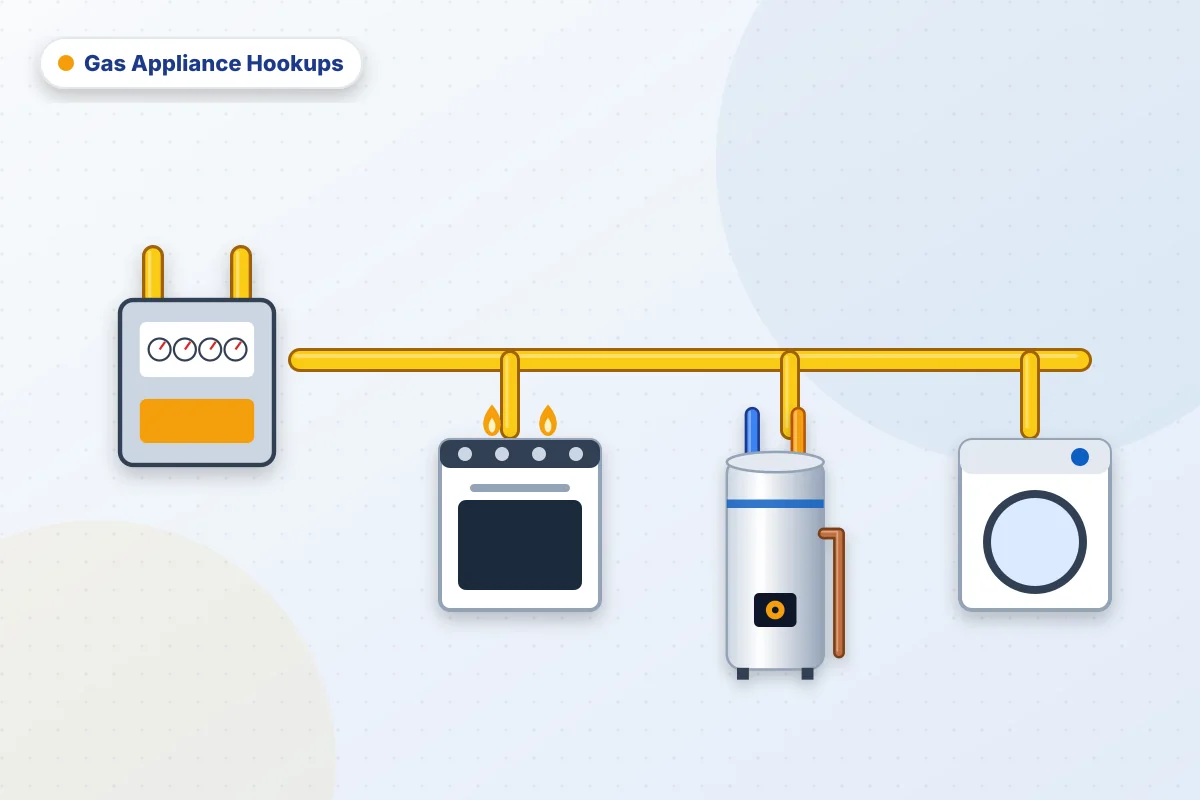
High-demand appliances often need a larger line than the old one. A tankless water heater, for example, burns more gas while running than a tank heater. Homes converting to tankless often need a larger gas line. See tankless water heater installation in Marietta.
Gas tank water heaters also connect to the gas line. Our water heater installation service in Marietta handles the gas connection, venting and testing.
What Materials Are Used for Gas Lines?
Gas lines in homes use 3 main materials: black iron pipe, corrugated stainless steel tubing (CSST) and polyethylene pipe for underground runs.
| Material | What it is | Typical use |
|---|---|---|
| Black iron pipe | Threaded steel pipe | Main lines and exposed runs |
| CSST | Flexible stainless steel tubing with a plastic jacket | Runs through walls, attics and crawl spaces |
| Polyethylene (PE) | Yellow plastic pipe rated for gas | Underground lines to grills, pools and outbuildings |
CSST must be electrically bonded to the home’s grounding system under the fuel gas code. Bonding reduces damage from nearby lightning strikes.
How Does Gas Line Installation Work?
A gas line installation works in 6 steps: load calculation, route planning, permit, installation, pressure test and appliance connection.
- Calculate the load. The plumber adds the gas demand of every appliance on the line.
- Plan the route. The plumber sizes the pipe for the load and the distance from the meter.
- Pull the permit. The plumber files the permit that Cobb County or the City of Marietta requires.
- Install the piping. The plumber runs the new line and installs a shutoff valve at each appliance.
- Pressure-test the line. The plumber pressurizes the line and watches the gauge for any drop that signals a leak.
- Connect and light. The plumber connects the appliance, purges air from the line and checks each joint.
A pressure test is a leak test that fills new gas piping with air at a set pressure and confirms the pressure holds over time.
Is a Call to 811 Required Before a Gas Line Is Buried?
Yes. Georgia law requires anyone who digs, including homeowners, to contact Georgia 811 at least 3 business days before mechanized digging begins. Georgia 811 notifies utility companies, which mark buried lines for free.
Buried gas lines to grills, pool heaters, generators and outbuildings need trenching. The plumber contacts Georgia 811 before any trench work.
Gas Appliance Guides for Marietta Homeowners
Gas emergencies need a calm plan before the first call. Read Plumbing Emergency: What to Do Before the Plumber Arrives for the gas, water and sewage steps.
Frequently Asked Questions
What does a natural gas leak smell like?
A natural gas leak smells like rotten eggs. Atlanta Gas Light adds an odorant called mercaptan to natural gas so leaks are easy to notice.
Who do I call for a gas leak in Marietta, GA?
Leave the building and call 911 or Atlanta Gas Light at 1-877-427-4321 from a safe place. Call a licensed gas line plumber for repairs after the area is declared safe.
Can a plumber install a gas line for a new stove?
Yes. A licensed gas line plumber runs a new line, installs a shutoff valve, pressure-tests the line and connects the range.
What is CSST gas line?
CSST is corrugated stainless steel tubing, a flexible gas line with a plastic jacket. The fuel gas code requires CSST to be electrically bonded.
Is a call to 811 required before installing an underground gas line?
Yes. Georgia law requires contacting Georgia 811 at least 3 business days before mechanized digging.
Book a Gas Line Plumber in Marietta, GA
New gas appliance or a gas line repair? Call (770) 230-0611. Plumber Marietta GA installs and repairs gas lines across Marietta, East Cobb, Kennesaw, Smyrna, Roswell, Acworth and Vinings.