
Water Softener Installation in Marietta, GA
Water softener installation in Marietta, GA is the testing of a home’s water hardness and the installation of an ion exchange softener on the main water line. The softener removes calcium and magnesium before water reaches the fixtures. Softened water reduces scale in pipes and water heaters. Call (770) 230-0611 to book Plumber Marietta GA.
Softener installation is part of our plumbing company serving Marietta and Cobb County. Our plumbers test the water first, then recommend a system sized to the home.
What Is Hard Water?
Hard water is water that carries dissolved calcium and magnesium minerals, measured as calcium carbonate in milligrams per liter (mg/L) or grains per gallon (gpg). One grain per gallon equals 17.1 mg/L.
The US Geological Survey (USGS) groups water into 4 hardness classes:
| USGS class | mg/L as calcium carbonate | Grains per gallon |
|---|---|---|
| Soft | 0–60 | 0–3.5 |
| Moderately hard | 61–120 | 3.5–7.0 |
| Hard | 121–180 | 7.0–10.5 |
| Very hard | Above 180 | Above 10.5 |
What Are the Signs of Hard Water in a Marietta Home?
Hard water leaves white scale on fixtures, spots on dishes, soap scum in tubs and sediment in water heaters. These 6 signs point to hard water:
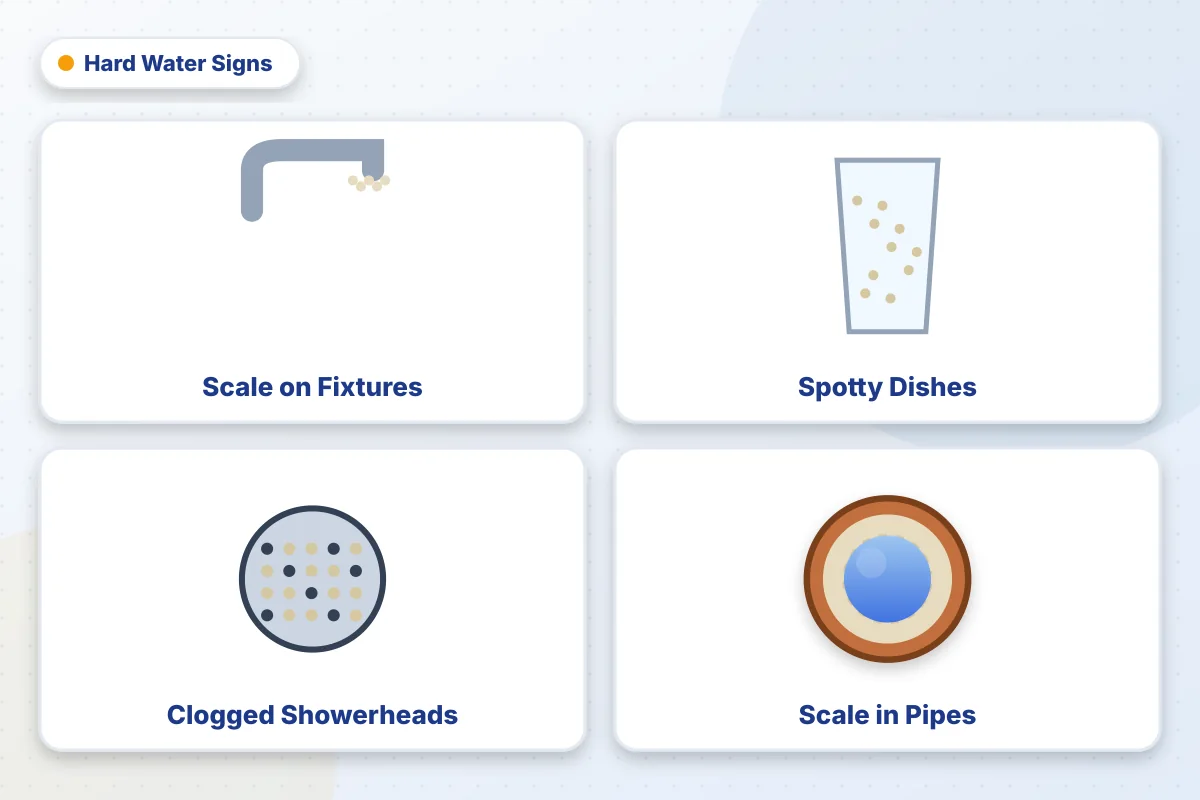
- White or chalky scale on faucets and showerheads
- Spots and film on glasses after the dishwasher runs
- Soap scum rings in tubs and showers
- Soap and shampoo that lather poorly
- Popping or rumbling sounds from the water heater
- Low flow from showerheads clogged with scale
Scale inside a tank water heater settles as sediment. Our water heater repair service in Marietta, GA flushes sediment and replaces damaged parts.
How Do You Test Water Hardness in Marietta?
Test water hardness with a hardness test strip, a professional water test, or the hardness value in your utility’s annual water quality report. Marietta homes receive treated water from the Cobb County-Marietta Water Authority, which draws from the Chattahoochee River and Lake Allatoona.
Published hardness estimates for Marietta vary between sources, so a test at the tap gives the most accurate number. Use one of these 3 methods:
- Test strip: Dip the strip in cold tap water and match the color to the chart.
- Professional test: Our plumber tests hardness, pH and iron during the visit.
- Water quality report: Check the annual Consumer Confidence Report from Marietta Power & Water or Cobb County Water System.
Our guide Hard Water in Marietta: Effect on Pipes and Appliances explains what each result means.
How Does a Water Softener Work?
A water softener works by ion exchange: resin beads inside the softener tank trade calcium and magnesium ions for sodium or potassium ions as water flows through. The softened water then flows to every fixture in the home.
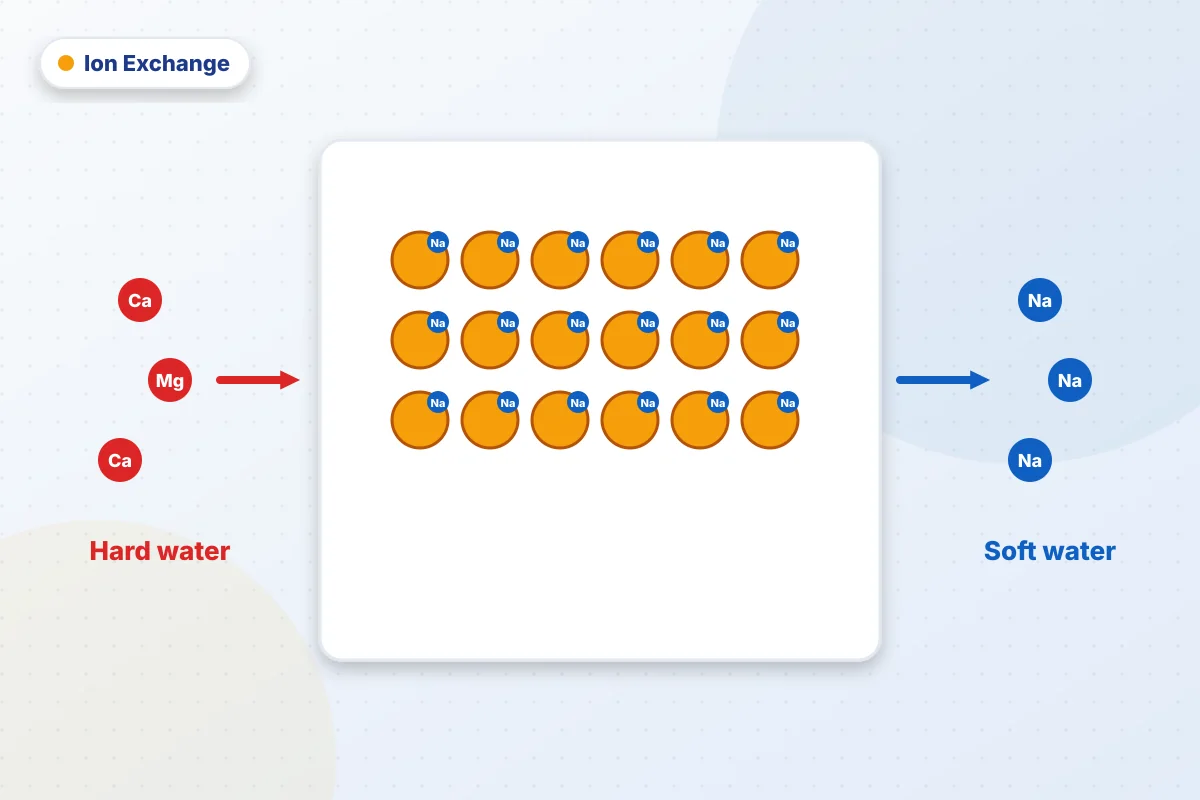
A softener has 3 main parts:
- Resin tank: holds the resin beads that capture hardness minerals.
- Brine tank: holds salt or potassium chloride used to clean the resin.
- Control valve: runs the regeneration cycle on a timer or by water use.
Regeneration is the cycle that flushes the resin with salt brine, releases the captured minerals down the drain line, and restores the resin’s capacity.
What Size Water Softener Does a Marietta Home Need?
Size a water softener by multiplying daily household water use by the water hardness in grains per gallon. Then choose a capacity that covers about a week between regenerations. The result is the number of grains the softener removes per day.
The plumber sizes the system in 3 steps:
- Measure hardness in grains per gallon at the tap.
- Estimate daily water use from the number of people and fixtures.
- Multiply and match. Daily water use × hardness = grains per day. Choose a capacity that covers about 7 days of grains between regenerations.
An oversized softener wastes salt and water. An undersized softener regenerates too often and lets hard water through.
How Does Water Softener Installation Work?
A water softener installation works in 6 steps: location choice, bypass valve, plumbing connection, drain line, brine setup and programming.
- Choose the location. The plumber places the softener near the main water line, usually in the garage, basement or utility room.
- Install a bypass valve. The bypass lets water skip the softener for service or outdoor use.
- Connect to the main line. The plumber cuts into the main line after the outdoor spigot branch so irrigation water stays unsoftened.
- Run the drain line. The regeneration line drains to a floor drain, standpipe or laundry drain with a code-required air gap.
- Fill the brine tank. The plumber adds salt or potassium chloride.
- Program and test. The plumber sets hardness and regeneration settings, then checks for leaks.
Tankless water heaters benefit the most from softened water, because scale builds up in the heat exchanger. See tankless water heater installation in Marietta.
How Do You Maintain a Water Softener?
Keep the brine tank at least one-quarter full of salt, break up salt bridges, and have the system checked once a year. These 4 tasks keep a softener working:
- Add salt when the brine tank drops below one-quarter full.
- Break up any hard salt crust, called a salt bridge, that blocks the brine.
- Clean the brine tank when sludge builds up at the bottom.
- Test hardness after softening once a year to confirm the system works.
Is a Water Softener the Same as a Water Filter?
No. A water softener removes hardness minerals, while a water filter removes contaminants such as chlorine, sediment or odors. Homes with both hardness and taste concerns use a softener paired with a carbon filter.
| System | Removes | Does not remove |
|---|---|---|
| Water softener | Calcium, magnesium | Chlorine, most chemicals |
| Carbon filter | Chlorine, taste and odor compounds | Hardness minerals |
Water Quality Guides for Marietta Homeowners
Hard water and scale also reduce water pressure at showerheads and faucets. Read Low Water Pressure Causes and Fixes for other causes.
Frequently Asked Questions
Is Marietta, GA water hard?
Published hardness estimates for Marietta vary between sources. Test the water at your tap or check the annual water quality report from your utility for the measured value.
How does a water softener work?
A water softener uses resin beads to trade calcium and magnesium ions for sodium or potassium ions, then cleans the beads with salt brine during regeneration.
Where is a water softener installed?
A water softener is installed on the main water line, usually in the garage, basement or utility room, after the branch that feeds outdoor spigots.
Does a water softener remove chlorine?
No. A water softener removes hardness minerals only. A carbon filter removes chlorine, taste and odor.
How often do I add salt to a water softener?
Add salt when the brine tank drops below one-quarter full. Homes with harder water and more people use salt faster.
Book Water Softener Installation in Marietta, GA
Scale on fixtures or spots on dishes? Call (770) 230-0611. Plumber Marietta GA tests water and installs softeners across Marietta, East Cobb, Kennesaw, Smyrna, Roswell, Acworth and Vinings.