
A water heater leaks from one of 6 sources: the top pipe connections, the T&P relief valve, the drain valve, the anode rod port, condensation, or a corroded tank. Leaks from fittings and valves are repairable. A leak from the tank body means replacement.
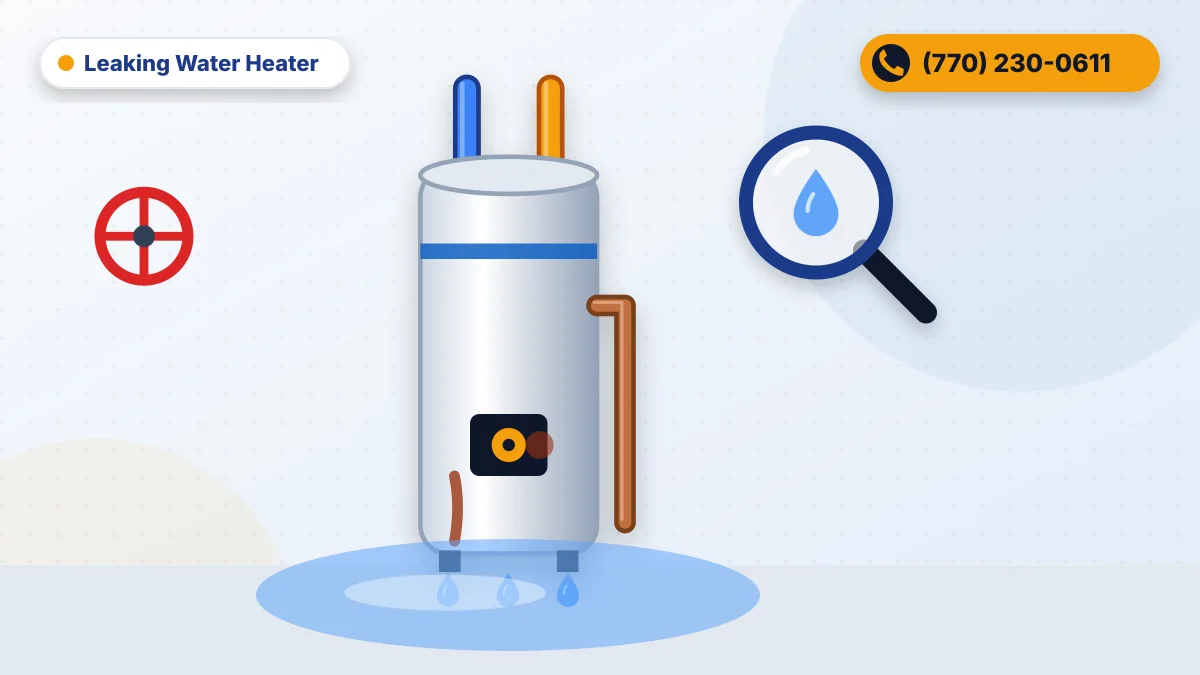
A water heater leak is any water escaping from the heater, its valves or its pipe connections. The location of the water points to the cause. Our licensed water heater repair team in Marietta traces and fixes leaks the same visit.
What Do You Do First When a Water Heater Leaks?
Turn off the power or gas, close the cold water supply valve, and move belongings away from the water. These 4 steps stop the leak from growing:
- Turn off the heat source. Switch off the breaker for an electric heater. Set a gas heater’s control to “off.”
- Close the cold water supply. The valve sits on the pipe entering the top of the tank.
- Protect the area. Move stored items, and soak up water with towels or a wet vacuum.
- Drain the tank when the body leaks. Attach a hose to the drain valve and empty the tank to a floor drain or outside.
A large or fast leak calls for the main water valve as well. Our guide to first steps in a plumbing emergency covers the main shutoff.
Where Is the Water Heater Leak Coming From?
Find the leak by drying the tank and fittings, then watching where fresh water appears: at the top, the side or the bottom. The location narrows the cause.
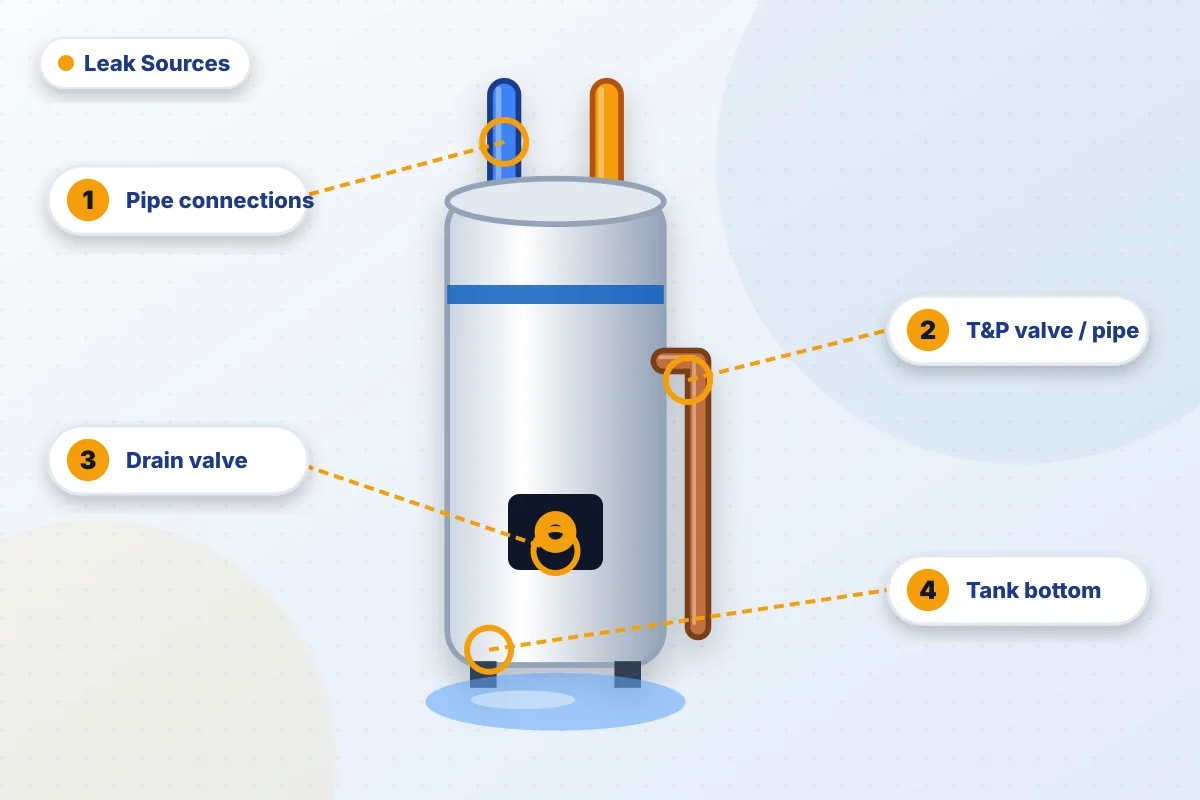
| Leak location | Likely source | Repairable? |
|---|---|---|
| Top of the tank | Cold inlet or hot outlet connection | Yes |
| Top of the tank | Anode rod port | Yes |
| Side of the tank | T&P relief valve or its discharge pipe | Yes |
| Bottom, at the drain valve | Loose or worn drain valve | Yes |
| Bottom, under the burner (gas) | Condensation | No repair needed |
| Bottom, from the tank itself | Corroded tank body | No, replace the heater |
Why Does Water Leak From the Top of a Water Heater?
Water leaks from the top of a water heater at loose or corroded inlet and outlet connections, or at the anode rod port. A plumber tightens or replaces the fitting, or reseals the anode port.
Is the Water Heater Leaking or Just Condensing?
A gas water heater forms condensation when cold incoming water meets hot exhaust gas, and the drips stop once the tank heats up. Condensation is common after heavy hot water use or on cold days.
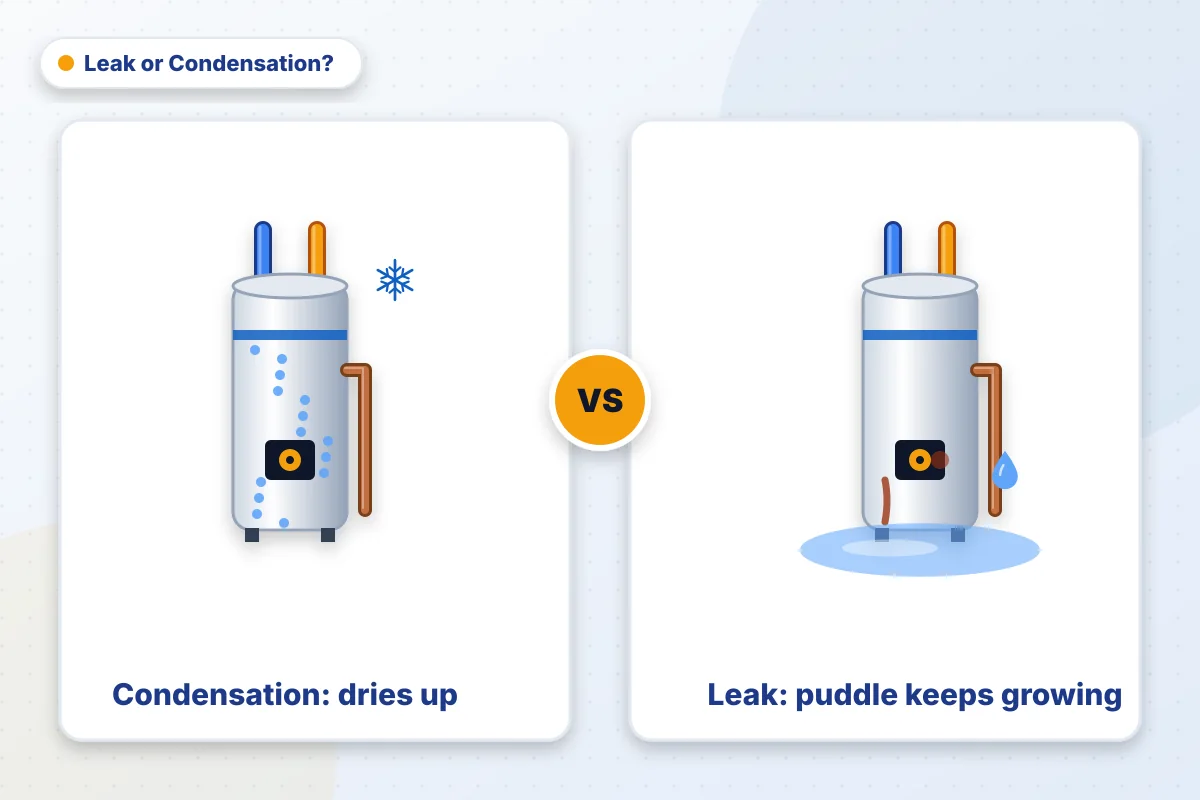
Condensation shows these 3 traits:
- Drips appear under the burner area after heavy hot water use.
- The drips stop after the tank reaches temperature.
- The tank surface and fittings stay dry.
A puddle that keeps growing with the tank fully heated is a real leak.
Why Is the T&P Valve Leaking?
A temperature and pressure (T&P) relief valve leaks when the tank temperature or pressure runs too high, or when the valve itself wears out. The T&P valve is a safety device that opens to release excess heat or pressure.
The T&P valve leaks for 3 reasons:
- High water pressure. Excess street pressure forces the valve open.
- Thermal expansion. Heated water expands in a closed system with no expansion tank.
- Worn valve. Mineral buildup keeps the valve from sealing.
Never cap or plug a T&P valve or its discharge pipe. A blocked relief valve turns an overheated tank into an explosion risk. A plumber tests the pressure and replaces the valve.
What Does a Leak From the Bottom of the Tank Mean?
A leak from the bottom of the tank body means the steel tank has corroded through, and the heater needs replacement. A corroded tank cannot be patched.
Corrosion starts when the anode rod wears out and sediment overheats the tank bottom. Rumbling and popping noises often come before a bottom leak. Read what a rumbling water heater is telling you.
Do You Repair or Replace a Leaking Water Heater?
Repair a leak from a fitting, valve or anode port. Replace the heater when the tank body leaks. Age decides the close calls. The US Department of Energy places tank water heater life at 10 to 15 years.
Our repair-or-replace guide for water heaters lays out costs and a 4-step decision.
How Do You Prevent Water Heater Leaks?
Prevent water heater leaks by flushing the tank yearly, checking the anode rod, testing the T&P valve and installing a drain pan with an expansion tank where required.
- Flush yearly. Removing sediment protects the tank bottom.
- Check the anode rod. A fresh anode rod draws corrosion away from the tank.
- Test the T&P valve. A yearly test confirms the valve opens and reseals.
- Add a drain pan. A pan under the heater catches drips before they reach floors.
- Control pressure. An expansion tank absorbs thermal expansion in closed systems.
Related Water Heater Guides
Frequently Asked Questions
Is a leaking water heater dangerous?
A leaking water heater causes water damage, and a T&P valve discharge signals excess temperature or pressure. Turn off the heat source and call a plumber.
Can a leaking water heater be repaired?
Yes, when the leak comes from a fitting, valve or anode port. A leak from the tank body needs replacement.
Why is my water heater leaking from the bottom?
A bottom leak comes from the drain valve, condensation, or a corroded tank. A corroded tank needs replacement.
Is it normal for a water heater to drip?
Condensation drips from gas heaters are normal after heavy hot water use and stop once the tank heats. Any other drip is a leak.
How long can I use a leaking water heater?
Stop using a water heater with a tank body leak. The leak grows, and the tank fails without warning.
Leaking Water Heater in Marietta?
Water under your heater? Call (770) 230-0611. Plumber Marietta GA finds the source and repairs or replaces the heater, 24/7.