
Find a hidden water leak by reading the water meter, using no water for 2 hours, and reading it again; any change means a leak. Then narrow the location with a toilet dye test, fixture checks and a room-by-room search for stains, warm floors and wet spots.
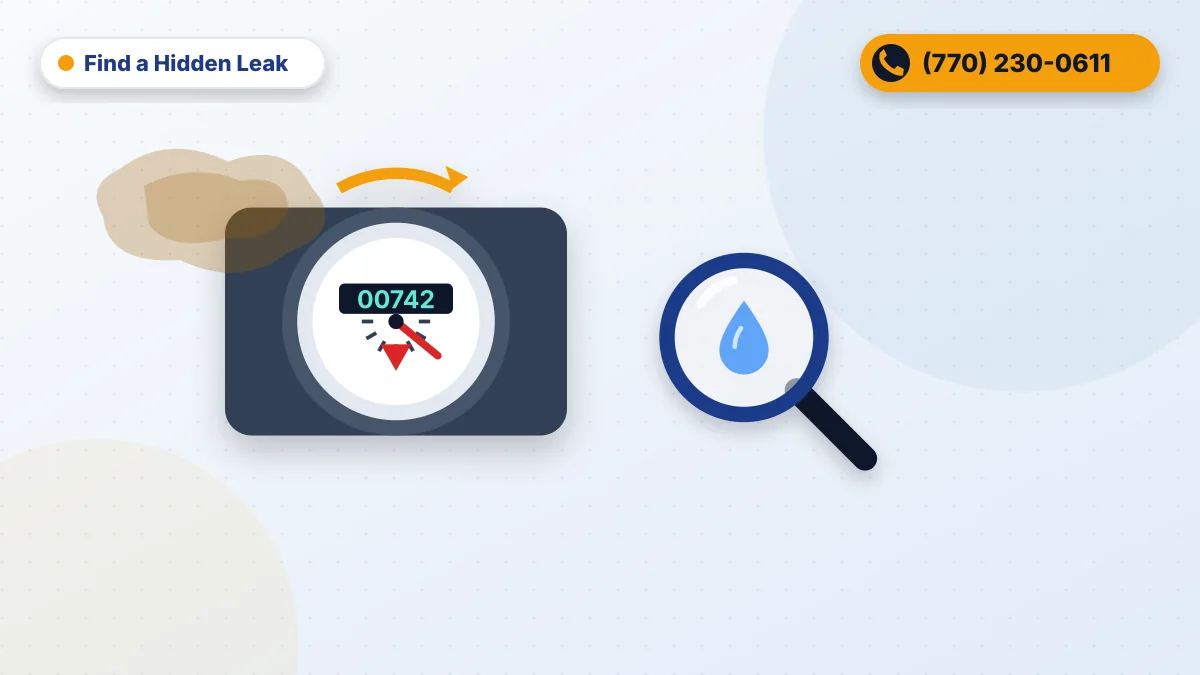
A hidden water leak is water escaping from a pipe, drain or fixture out of sight. It sits inside walls, under floors, beneath a slab or underground in the yard. The EPA WaterSense program reports that household leaks waste nearly 10,000 gallons per year in an average home. A leak that the checks below cannot pinpoint calls for our professional leak detection in Marietta.
What Are the Signs of a Hidden Water Leak?
The 7 signs of a hidden leak are a rising bill, a moving meter, stains, a musty smell, warm floor spots, running water sounds and wet yard spots.
| Sign | Where the leak sits |
|---|---|
| Higher water bill with no change in use | Anywhere on the supply side |
| Stains or bubbling paint on walls or ceilings | Pipe inside the wall or the floor above |
| Musty odor or mold | Slow leak behind a surface |
| Warm spot on a floor | Hot water line under a slab |
| Running water sound with fixtures off | Supply line or toilet |
| Low water pressure | Larger leak on the main or a branch |
| Soggy yard spot or green strip | Underground service line |
How Do You Check the Water Bill for a Leak?
Check the water bill by comparing winter usage with past months, as the EPA WaterSense program advises. A family of 4 using more than 12,000 gallons per month in January or February has a serious leak, according to EPA WaterSense.
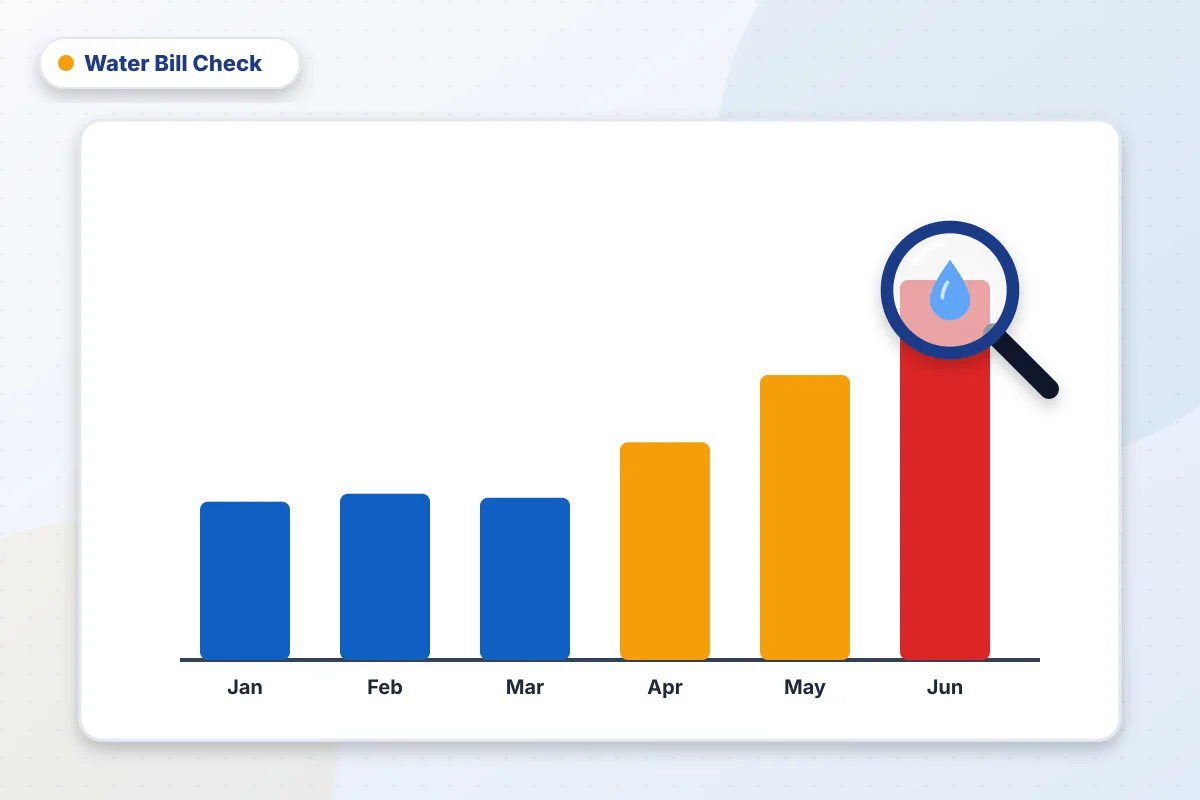
Winter bills show indoor use only, because lawn watering stops. A sudden jump with no change in household habits points to a leak.
How Do You Use the Water Meter to Find a Leak?
Use the water meter by reading it, using no water for 2 hours, and reading it again. Any change in the reading means water is leaking somewhere in the system, according to EPA WaterSense.
- Turn off all water use. Stop faucets, toilets, the washer, the dishwasher, the ice maker and irrigation.
- Read the meter. Write down the number, or watch the small leak indicator dial.
- Wait 2 hours. Use no water during the wait.
- Read it again. A higher reading or a spinning leak indicator confirms a leak.
Is the Leak Inside or Outside the House?
Find out by closing the home’s main shutoff valve and watching the meter. A meter that keeps moving with the main closed points to a leak in the service line between the meter and the house. A meter that stops points to a leak inside the home.
How Do You Test a Toilet for a Hidden Leak?
Test a toilet by putting a few drops of food coloring in the tank and waiting 10 minutes without flushing. Color in the bowl means the flapper leaks, according to EPA WaterSense. Toilets are a leading source of silent household leaks.
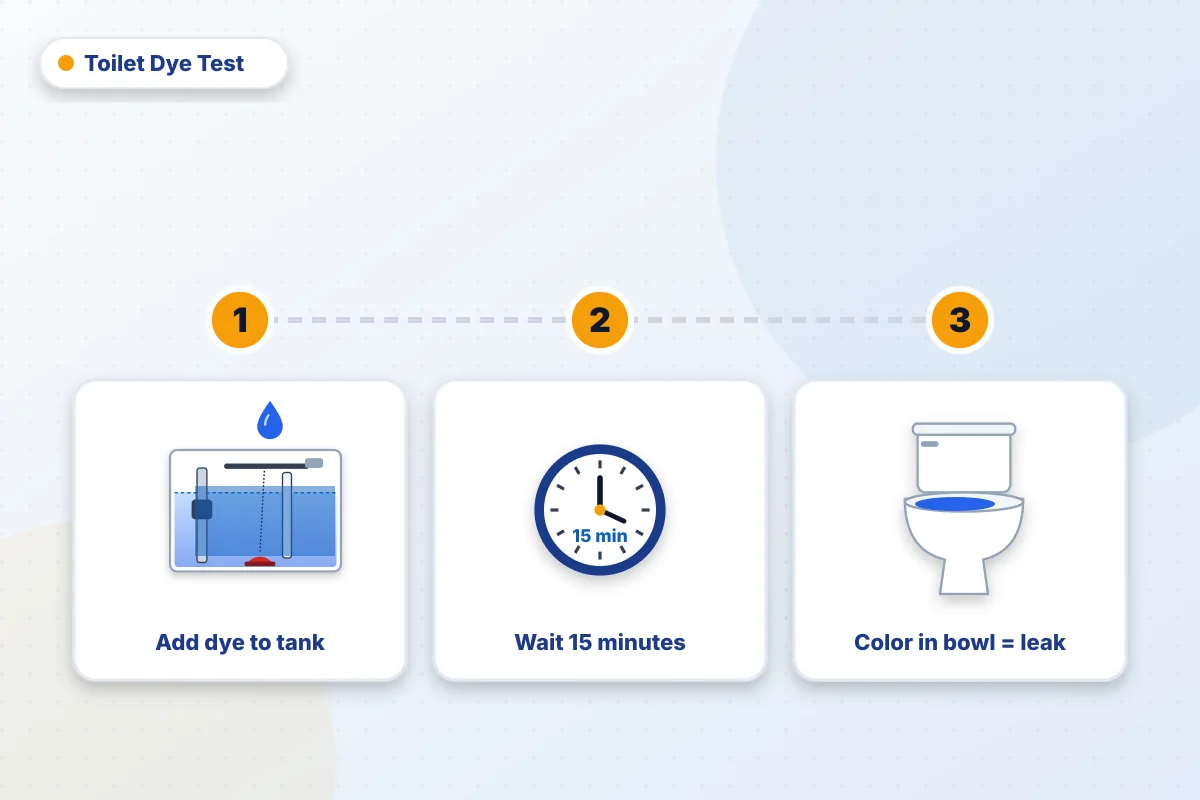
A leaking flapper or fill valve is a simple fix; follow our steps to stop a toilet from running. Flush after the test to clear the dye.
Which Fixtures and Appliances Do You Check?
Check faucets, showerheads, toilets, the water heater, the washing machine hoses, the dishwasher, the ice maker line and outdoor hose bibs. EPA WaterSense notes that a faucet dripping once per second wastes more than 3,000 gallons per year.
- Faucets and showerheads. Look for drips and wet cabinet floors under sinks.
- Water heater. Check the T&P valve, the drain valve and the tank base.
- Washing machine. Inspect hoses for bulges and drips at the connections.
- Dishwasher and ice maker. Look for water under and behind the appliance.
- Hose bibs. Check outdoor spigots and the wall behind them.
How Do You Find a Leak Inside a Wall, Ceiling or Floor?
Find a leak inside a wall, ceiling or floor by looking for stains, bubbling paint, soft drywall, warped flooring and warm spots, then tracing them toward the nearest plumbing.
- Walls. Stains and bubbling paint below bathrooms and kitchens.
- Ceilings. Brown rings under upstairs bathrooms.
- Floors. Warped wood, loose tile or a warm spot from a hot water line under a slab.
- Cabinets. Swollen particleboard under sinks.
A warm floor spot points to a slab leak, which needs professional equipment to locate.
How Do You Find a Leak in the Yard?
Find a yard leak by walking the path from the water meter to the house and looking for soggy ground, a greener strip of grass, or sunken soil. The meter test with the main shutoff closed confirms a service line leak.
The homeowner owns the service line from the meter to the house. The utility owns the meter and the street side. Our guide on which utility handles a Marietta-area leak shows who to call.
When Do You Call a Plumber to Find a Leak?
Call a plumber when the meter confirms a leak but the checks above do not find it, or when the leak sits inside a wall, under a slab or underground. Plumbers locate leaks with acoustic listening, thermal imaging, pressure testing and tracer gas.
| Situation | Action |
|---|---|
| Toilet dye test shows a leak | Replace the flapper or fill valve |
| Dripping faucet | Replace the cartridge or washer |
| Meter moves, source not found | Call a plumber for leak detection |
| Warm floor spot | Call a plumber, possible slab leak |
| Meter moves with the main closed | Call a plumber, service line leak |
A large leak also drops water pressure; see the causes of weak water pressure.
Related Leak Guides
Frequently Asked Questions
How do I check for a water leak in my house?
Read the water meter, use no water for 2 hours, and read it again. Any change means a leak.
How do I find a leak in my wall?
Look for stains, bubbling paint, soft drywall and a musty smell near bathrooms and kitchens. A plumber confirms the spot with acoustic or thermal tools.
Can a toilet leak raise my water bill?
Yes. A leaking flapper runs water into the bowl around the clock. The food coloring test confirms it.
How much water does a leak waste?
Household leaks waste nearly 10,000 gallons per year in an average home, according to EPA WaterSense.
Who pays for a leak between the meter and the house?
The homeowner pays for leaks on the service line between the meter and the house. The utility handles the meter and the street side.
Can’t Find the Leak?
Meter still moving? Call (770) 230-0611. Plumber Marietta GA finds hidden leaks in walls, slabs and yards with non-invasive tools.