Hard water leaves calcium and magnesium scale inside pipes, water heaters, faucets and appliances, which slows flow, wastes energy and shortens equipment life. Marietta homeowners confirm their hardness level with a tap test or the utility’s annual water quality report.
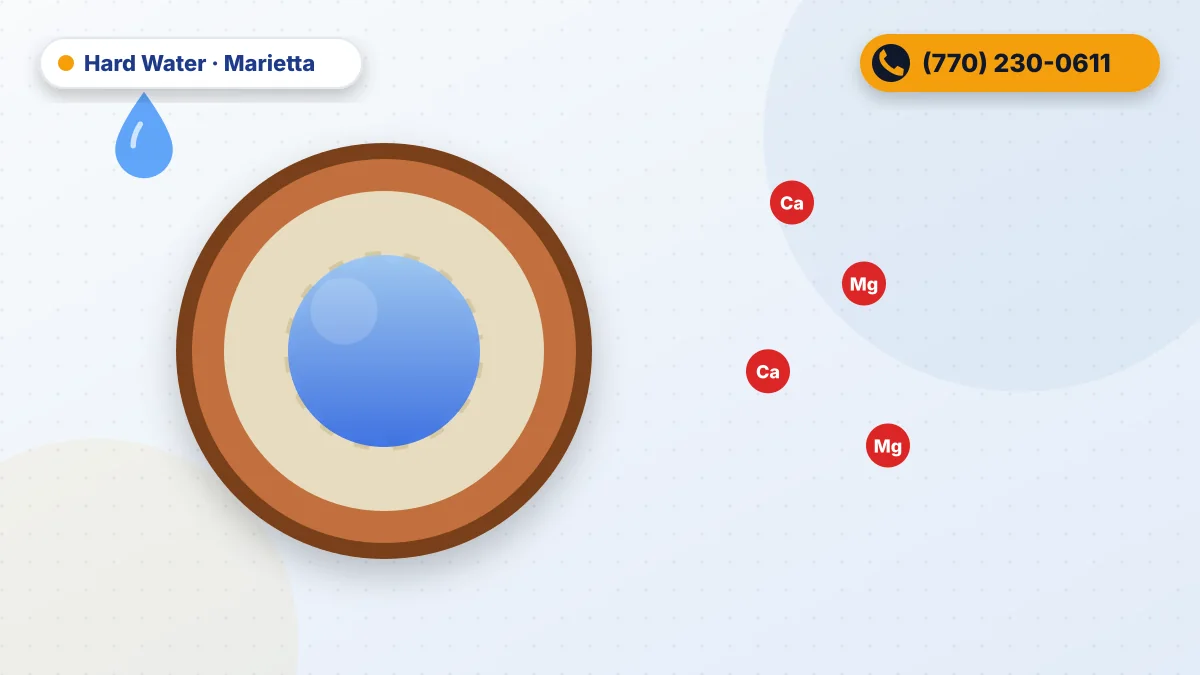
Hard water is water that carries dissolved calcium and magnesium minerals. Heat and evaporation pull these minerals out of the water as a chalky white scale. Our water softener installation service in Marietta tests hardness and removes the minerals at the main line.
How Hard Is Hard Water?
The US Geological Survey groups water into 4 hardness classes, from soft at 0 to 60 mg/L to very hard above 180 mg/L, measured as calcium carbonate. One grain per gallon (gpg) equals 17.1 mg/L.
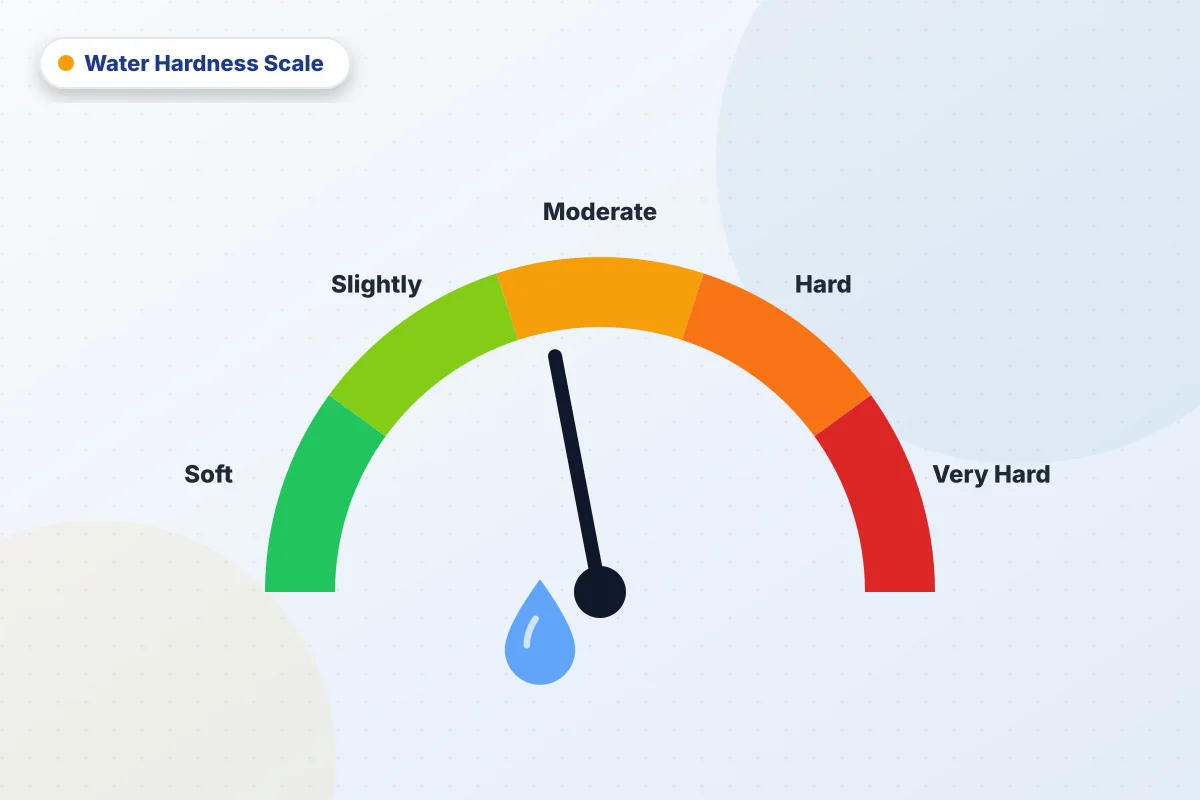
| USGS class | mg/L as calcium carbonate | Grains per gallon |
|---|---|---|
| Soft | 0–60 | 0–3.5 |
| Moderately hard | 61–120 | 3.5–7.0 |
| Hard | 121–180 | 7.0–10.5 |
| Very hard | Above 180 | Above 10.5 |
Is Marietta Water Hard?
Marietta water hardness varies by source and season, so a tap test or the annual water quality report gives the accurate number for your home. Marietta homes receive treated water from the Cobb County-Marietta Water Authority, which draws from the Chattahoochee River and Lake Allatoona.
Published hardness figures for Marietta differ between sources. Check hardness in 3 ways:
- Water quality report. Marietta Power & Water and Cobb County Water System publish an annual Consumer Confidence Report.
- Test strip. A hardness strip dipped in cold tap water gives a reading in minutes.
- Professional test. A plumber tests hardness, pH and iron at the tap.
Homes on private wells in outlying areas carry their own groundwater hardness, which a test confirms.
How Does Hard Water Affect Pipes?
Hard water deposits scale on the inside walls of pipes, and the buildup narrows the flow path over time. Scale collects fastest in hot water lines, because heat drives minerals out of the water.
Narrowed pipes reduce flow at faucets and showers. Read the full list of reasons a home loses water pressure.
How Does Hard Water Affect Water Heaters?
Hard water forms sediment at the bottom of tank water heaters and scale inside tankless heat exchangers, which wastes energy and shortens heater life.
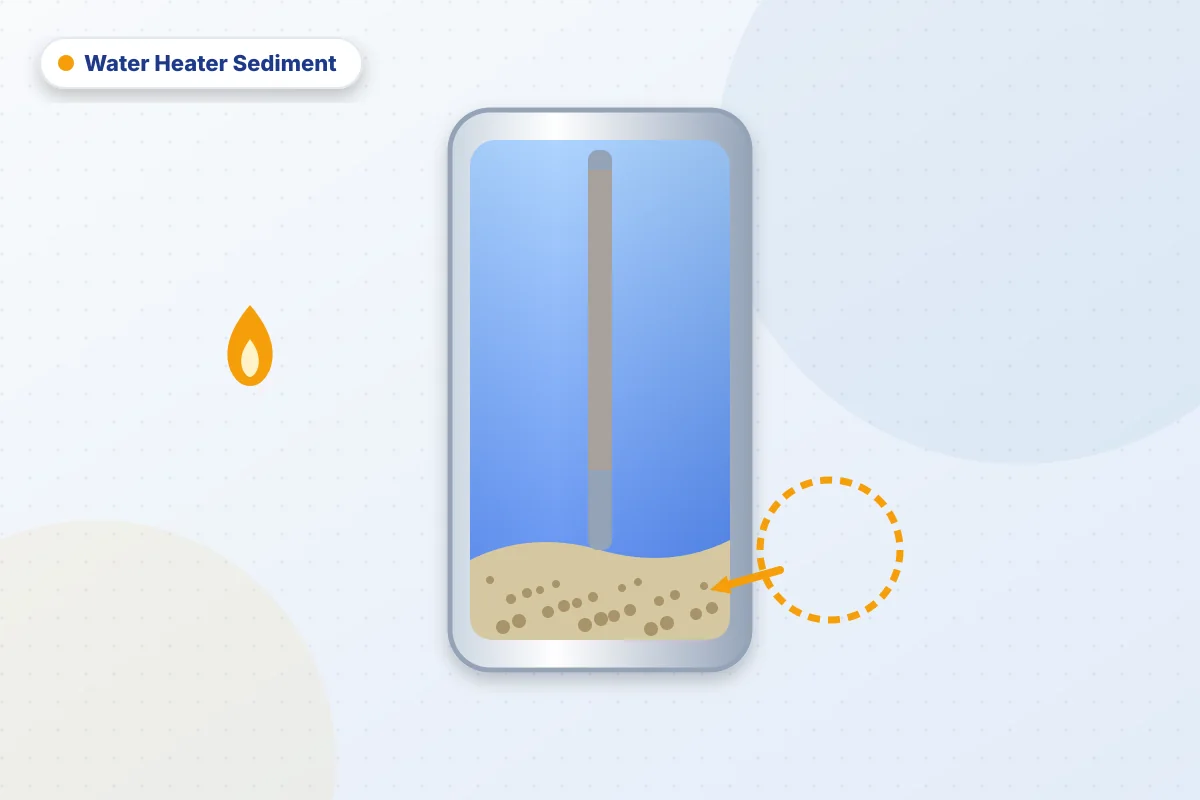
| Heater type | Hard water effect | Maintenance |
|---|---|---|
| Tank water heater | Sediment layer at the tank bottom, popping noises | Yearly flush |
| Tankless water heater | Scale in the heat exchanger, reduced flow | Yearly descaling |
| Electric elements | Scale coating on the element | Flush, element check |
Sediment causes the popping sound in tank heaters; see why a water heater pops and rumbles. Scale also matters when choosing a heater; see the tank or tankless decision for Marietta homes.
How Does Hard Water Affect Fixtures and Appliances?
Hard water clogs faucet aerators and showerheads, leaves spots on glass, builds scale in dishwashers and washing machines, and forms soap scum.
- Faucets and showerheads. Scale blocks aerator screens and spray holes.
- Dishwashers. Scale coats heating elements and spray arms; glasses come out spotted.
- Washing machines. Minerals collect in valves and hoses.
- Toilets. Scale rings form in bowls and fill valves wear sooner.
- Soap. Calcium reacts with soap and forms scum, so soap lathers poorly.
Is Hard Water Safe to Drink?
Yes. The US Geological Survey states that hard water is not a health concern. Hardness is a nuisance problem caused by mineral buildup, not a safety problem.
What Are the Signs of Hard Water at Home?
The signs of hard water are white scale on faucets, spots on dishes, soap that does not lather, stiff laundry and slow-flowing showerheads.
How Do You Protect Pipes and Appliances From Hard Water?
Protect pipes and appliances from hard water by installing a water softener, flushing the water heater yearly and cleaning aerators and showerheads.
- Install a water softener. An ion exchange softener removes calcium and magnesium at the main line.
- Flush the water heater. A yearly flush removes tank sediment.
- Descale tankless units. A yearly descaling keeps the heat exchanger clear.
- Clean fixtures. Soak aerators and showerheads in vinegar to dissolve scale.
Related Water Guides
Frequently Asked Questions
Does Marietta, GA have hard water?
Marietta hardness varies by source and season. Check the Consumer Confidence Report from your utility or test the water at the tap.
Is hard water bad for pipes?
Yes. Hard water leaves scale inside pipes that narrows the flow path over time, especially in hot water lines.
Does hard water damage water heaters?
Yes. Hard water forms sediment in tank heaters and scale in tankless heaters, which wastes energy and shortens heater life.
Is hard water safe to drink?
Yes. The USGS states that water hardness is not a health concern.
How do you get rid of hard water?
An ion exchange water softener removes the calcium and magnesium that make water hard.
Hard Water Problems in Marietta?
Scale on faucets or a rumbling water heater? Call (770) 230-0611. Plumber Marietta GA tests your water and installs the right softener.