
Prevent frozen pipes in Cobb County by insulating pipes in crawl spaces, attics and garages, draining outdoor hose bibs before winter, and dripping faucets on exposed pipes during hard freezes. Keep the heat at 55°F or higher when away from home, as the American Red Cross advises.
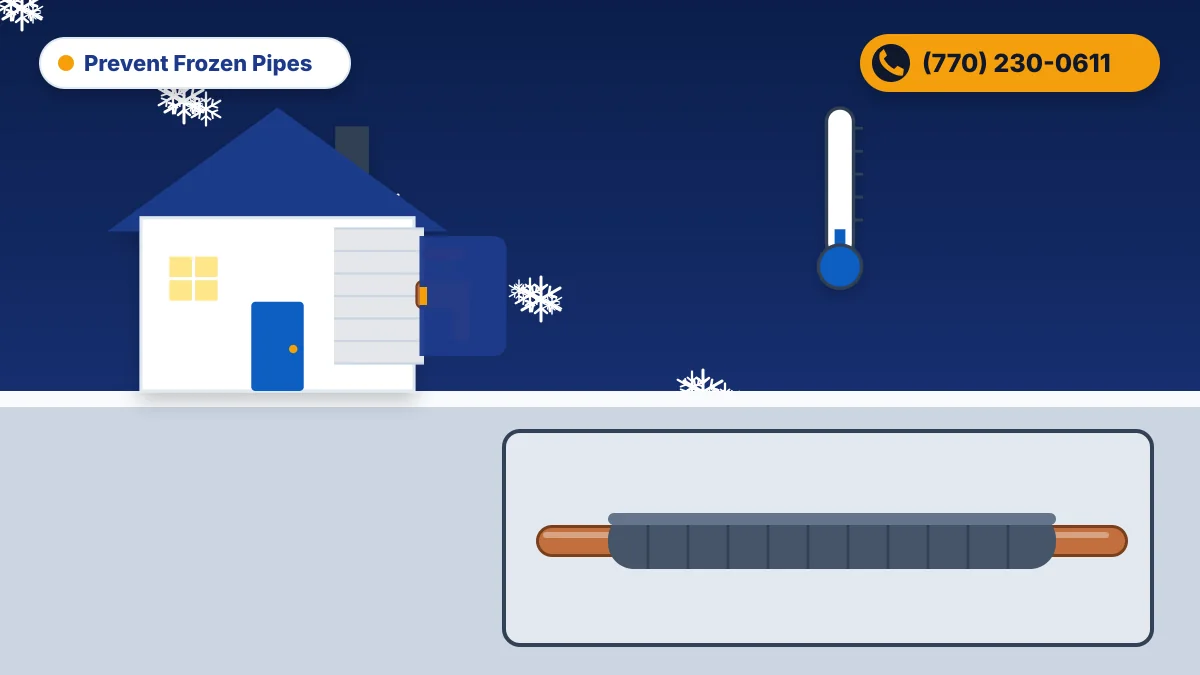
Frozen pipe prevention is the set of steps that keep water lines above 32°F during cold weather. A frozen pipe stops water flow, and a split pipe floods the home once the ice melts. Our Marietta frozen and burst pipe repair service handles the damage when prevention fails.
Why Do Pipes Freeze in Cobb County Homes?
Pipes freeze in Cobb County homes because short winter cold snaps hit water lines that run through uninsulated crawl spaces, attics and garages. The American Red Cross notes that pipe freezing is a particular problem in warmer climates, where pipes often run through these unprotected spaces.
Homes built for mild weather carry less pipe insulation than homes in cold climates. A single night below 32°F freezes an exposed line.
Where Do Pipes Freeze First?
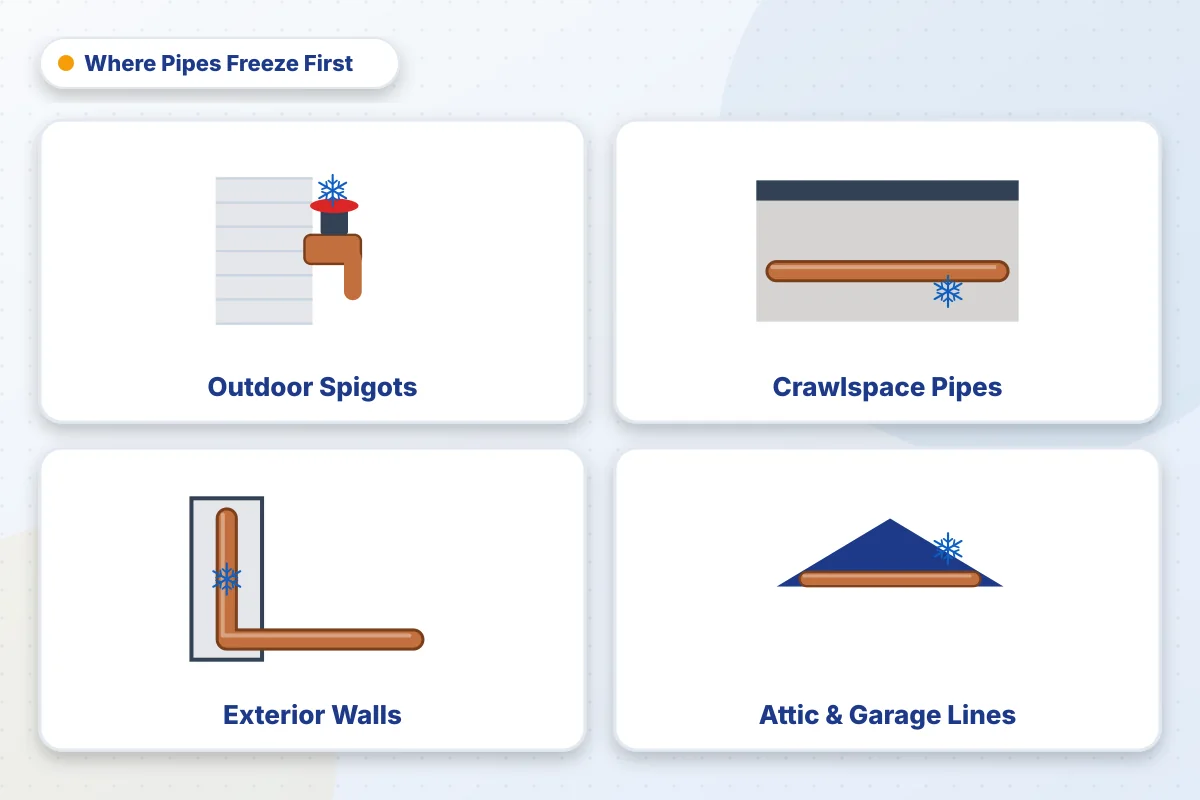
Pipes freeze first in crawl spaces, exterior walls, attics, garages, outdoor hose bibs and the spot where the water line enters the foundation.
| Location | Why it freezes |
|---|---|
| Crawl space | Unheated, open to outside air through vents |
| Exterior walls | Cold air reaches pipes behind thin insulation |
| Attic | Unheated space above the ceiling insulation |
| Garage | Unheated, door opens to outside air |
| Outdoor hose bib | Water sits in the spigot and the pipe behind it |
| Foundation entry | Water line enters from cold ground |
How Do You Prepare Pipes Before Winter?
Prepare pipes before winter in 5 steps: disconnect hoses, drain hose bibs, drain sprinkler lines, insulate exposed pipes, and seal cold air leaks.
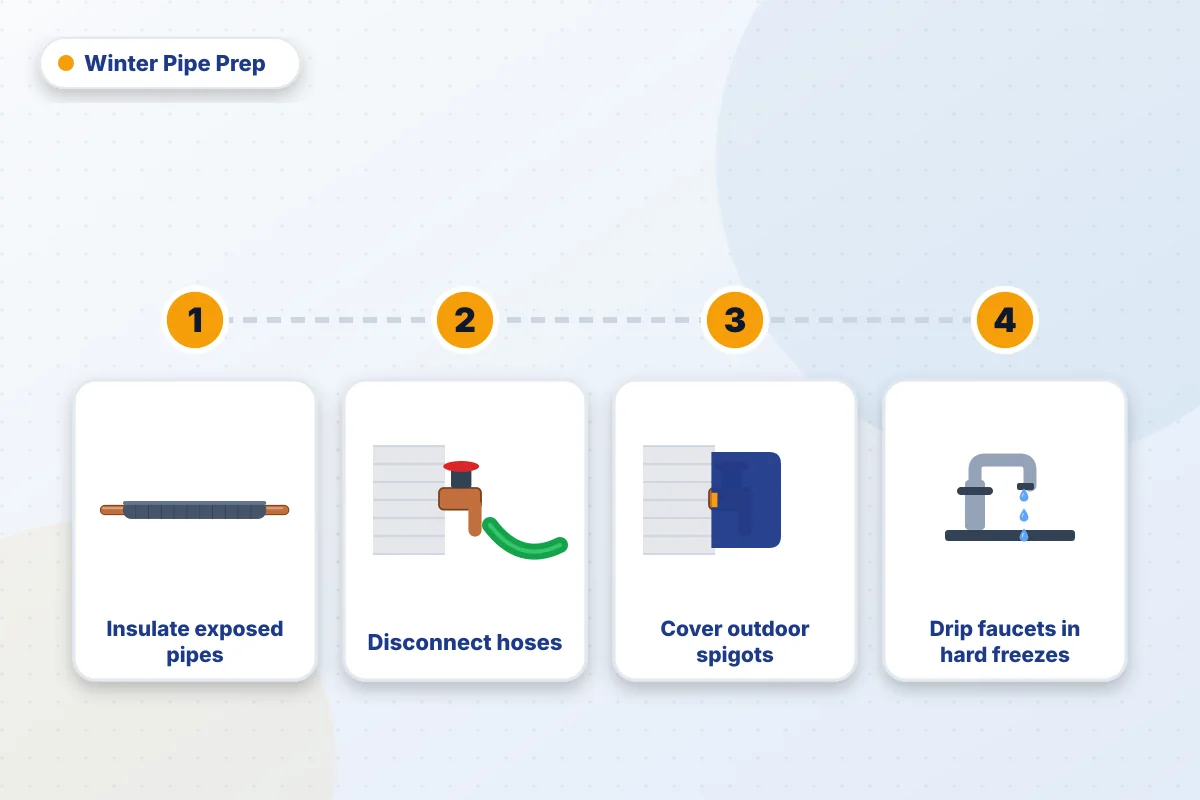
- Disconnect and store hoses. Remove, drain and store outdoor hoses, as the American Red Cross directs.
- Drain hose bibs. Close the inside valve that feeds each outdoor spigot, then open the spigot to drain the water.
- Drain sprinkler lines. Drain the water from irrigation and sprinkler supply lines.
- Insulate exposed pipes. Fit foam pipe sleeves on pipes in crawl spaces, attics and garages. UL-listed heat tape protects the coldest runs.
- Seal cold air leaks. Close crawl space vents in winter and seal gaps where pipes pass through exterior walls.
What Pipe Insulation Works Best?
Foam pipe sleeves work best for most exposed pipes, and UL-listed heat tape works best for pipes in the coldest spots. The American Red Cross names both products. Follow the manufacturer’s instructions for heat tape installation.
What Do You Do During a Hard Freeze?
During a hard freeze, close garage doors, open sink cabinets, drip faucets on exposed pipes, and hold the thermostat steady day and night. These 4 steps come from American Red Cross guidance.
- Close garage doors. Garages hold water lines and water heaters.
- Open cabinet doors. Warm room air reaches pipes under kitchen and bathroom sinks.
- Drip faucets. A slow drip from faucets fed by exposed pipes keeps water moving.
- Hold the thermostat steady. A lower setting at night lets pipes in exterior walls drop below freezing.
How Do You Protect Pipes When Leaving Home in Winter?
Protect pipes when leaving home by keeping the heat at 55°F or higher, as the American Red Cross advises. Ask a neighbor to check the home during a cold snap.
For a long winter absence, shut off the main water valve and drain the lines by opening the faucets. A plumber performs a full drain-down for homes left empty all winter.
How Do Landlords Protect Vacant Rentals?
Landlords protect vacant rentals by keeping the heat on at 55°F or higher, shutting off the main water valve and checking the property after each freeze. An empty rental has no one to notice a trickling faucet or a wet ceiling.
What Do You Do When a Pipe Freezes Anyway?
When a pipe freezes anyway, open the faucet, check the pipe for splits, and thaw it with gentle heat, never an open flame. A split pipe needs the main water valve closed first.
Our step-by-step guide to thawing a frozen pipe lists safe and unsafe heat sources. A burst pipe calls for the steps in our guide to handling a plumbing emergency until help arrives.
Related Winter Plumbing Guides
Frequently Asked Questions
At what temperature do pipes freeze?
Water in exposed pipes freezes below 32°F. Pipes in crawl spaces, attics and garages freeze first.
Do dripping faucets prevent frozen pipes?
Yes. A slow drip from faucets fed by exposed pipes keeps water moving during a hard freeze, as the American Red Cross advises.
What temperature keeps pipes from freezing when away?
Keep the heat at 55°F or higher when away from home, according to the American Red Cross.
Do you close crawl space vents in winter?
Yes. Closing crawl space vents in winter keeps cold air off the pipes under the floor. Reopen them in spring.
How do you winterize an outdoor faucet?
Disconnect the hose, close the inside valve that feeds the faucet, and open the outdoor faucet to drain it.
Winter Pipe Protection in Marietta and Cobb County
Need pipes insulated or a home drained for winter? Call (770) 230-0611. Plumber Marietta GA protects Cobb County homes before the freeze and repairs burst pipes 24/7.