
Tree roots in a sewer line show up as slow drains across the home, gurgling, repeated backups, sewage odor and lush patches of yard over the line. A sewer camera inspection confirms roots and shows where they entered.
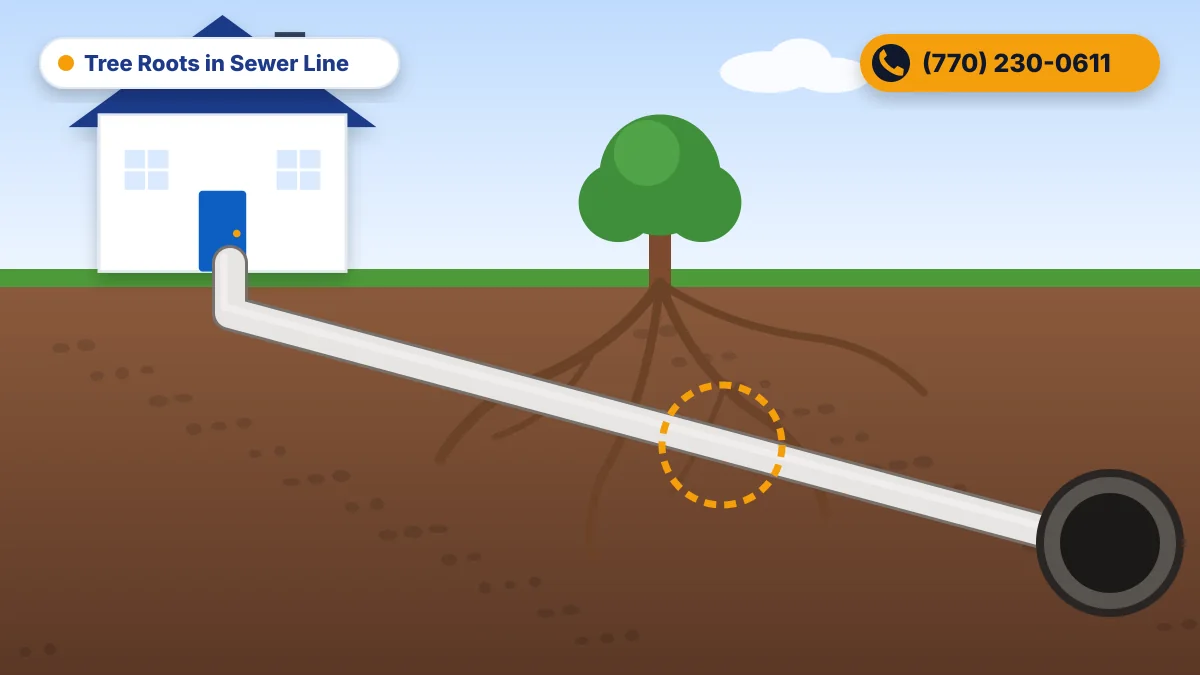
Tree root intrusion is the growth of roots into a sewer pipe through a crack or a loose joint. Roots follow the water vapor and nutrients that escape from the pipe, then fill the inside of the line with a mat that catches waste. Roots that crack or crush the pipe call for our sewer line repair specialists in Marietta.
How Do Tree Roots Get Into a Sewer Line?
Tree roots get into a sewer line through cracks, offset joints and gaps, where warm, moist air and nutrients leak into the soil. A hair-thin root enters the gap and grows inside the pipe, where water and nutrients flow every day.
The root mass grows in 3 stages:
- Entry. A fine root finds a crack or loose joint.
- Growth. The root branches inside the pipe and forms a mat.
- Damage. The mat traps waste and the expanding root widens the crack or breaks the pipe.
Which Sewer Pipes Do Roots Damage Most?
Roots damage vitrified clay, Orangeburg and cracked cast iron sewer pipes most. Clay pipe has a joint every few feet, and each joint is an entry point. Older Marietta neighborhoods with mature oaks and pines carry these pipe materials. Shifting red clay soil also opens joints for roots; read about how Cobb County clay soil moves buried sewer pipes.
What Are the Warning Signs of Roots in a Sewer Line?
The 7 warning signs of roots in a sewer line are slow drains, gurgling, repeated backups, sewage odor, lush patches in the yard, sunken soil and backups after rain.
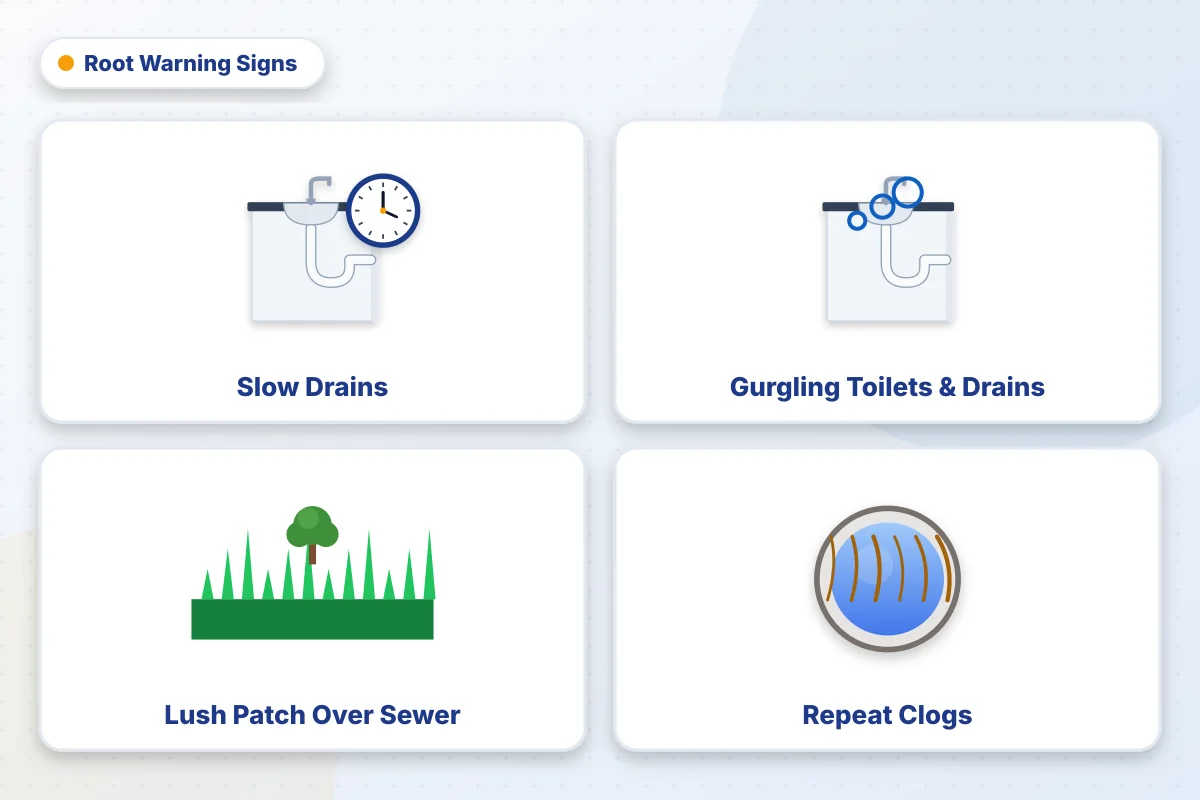
| Warning sign | What it means |
|---|---|
| Slow drains at 2 or more fixtures | Roots narrow the main line |
| Gurgling toilets and drains | Air trapped behind a partial blockage |
| Repeated backups after cleaning | Roots regrow after a snaking |
| Sewage odor inside or outside | Gas escaping from a cracked pipe |
| Green, lush patch over the line | Sewage feeding the grass |
| Sunken soil or a sinkhole | Broken pipe washing out soil |
| Backups after heavy rain | Groundwater entering cracks |
The strongest sign is a main line clog that returns weeks after cleaning. Snaking cuts the roots, but the roots grow back through the same crack.
How Do You Confirm Roots in a Sewer Line?
Confirm roots with a sewer camera inspection, which shows the root mass, the entry point and its distance from the cleanout. The camera also shows whether the pipe is cracked, offset or collapsed.
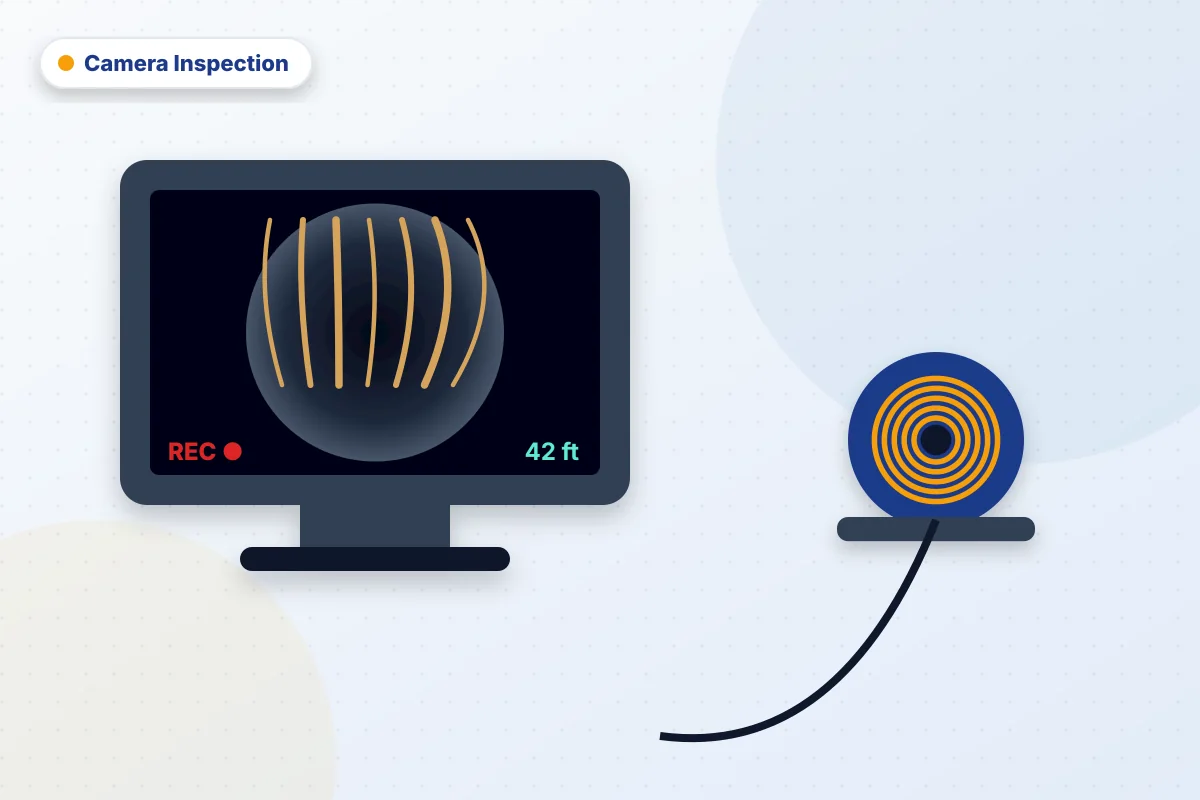
The camera result decides the fix. A clean pipe with roots at one joint calls for a different repair than a crushed pipe.
How Do You Get Rid of Tree Roots in a Sewer Line?
Get rid of tree roots by cutting them out mechanically or with hydro jetting, then sealing the entry point with pipe lining or replacing the damaged section. Cutting alone clears the line for a time. Sealing the crack stops regrowth.
| Fix | What it does | Lasting result? |
|---|---|---|
| Mechanical root cutting | A cutting head on a drain machine clears roots | Temporary, roots regrow |
| Hydro jetting | High-pressure water cuts roots and scours the pipe | Temporary, roots regrow |
| Pipe lining (CIPP) | A resin liner seals cracks and joints inside the pipe | Yes, seals entry points |
| Pipe bursting or replacement | A new seamless pipe replaces the old line | Yes, removes the weak pipe |
Cutting and jetting are drain cleaning services; see our main line drain clearing in Marietta. Lining and replacement costs, per foot, are in our guide to sewer replacement prices in Marietta.
Do You Have to Remove the Tree?
No. Most root intrusions are fixed without removing the tree, by lining or replacing the pipe so roots cannot enter. Tree removal is an option when roots have crushed the line or a tree sits directly over it. Tree removal costs $500 to $2,500 per tree in Atlanta, according to Angi.
How Do You Keep Roots Out of a Sewer Line?
Keep roots out of a sewer line by sealing cracks, planting trees away from the line, installing root barriers and scheduling camera checks on older pipes.
- Seal the pipe. Lining or replacement removes the cracks roots use.
- Plant with care. Keep new trees away from the sewer line route.
- Install root barriers. Physical barriers steer roots away from the pipe.
- Inspect older lines. A camera check on clay or cast iron pipe finds roots early.
Related Sewer Guides
Frequently Asked Questions
How do I know if tree roots are in my sewer line?
Slow drains throughout the home, gurgling and clogs that return after cleaning point to roots. A sewer camera inspection confirms them.
Can tree roots break a sewer pipe?
Yes. Growing roots widen cracks and break clay, Orangeburg and cast iron pipes.
Does snaking remove tree roots for good?
No. Snaking cuts the roots, but they regrow through the same crack. Lining or replacement seals the entry point.
Which trees cause sewer line problems?
Any large tree near a leaking sewer line sends roots toward it. Trees with fast-growing, water-seeking roots cause the most trouble.
Who pays for tree roots in a sewer line?
The homeowner pays for root damage in the private sewer lateral. The utility maintains the public main.
Roots in Your Sewer Line?
Clogs keep coming back? Call (770) 230-0611. Plumber Marietta GA inspects the line with a camera and removes roots for good.