
Repiping and Polybutylene Pipe Replacement in Marietta, GA
Repiping in Marietta, GA is the replacement of a home’s old or failing water supply pipes, such as polybutylene or galvanized steel, with new PEX, copper or CPVC pipe. Plumber Marietta GA repipes homes across Marietta and Cobb County with licensed plumbers and permitted work. Call (770) 230-0611.
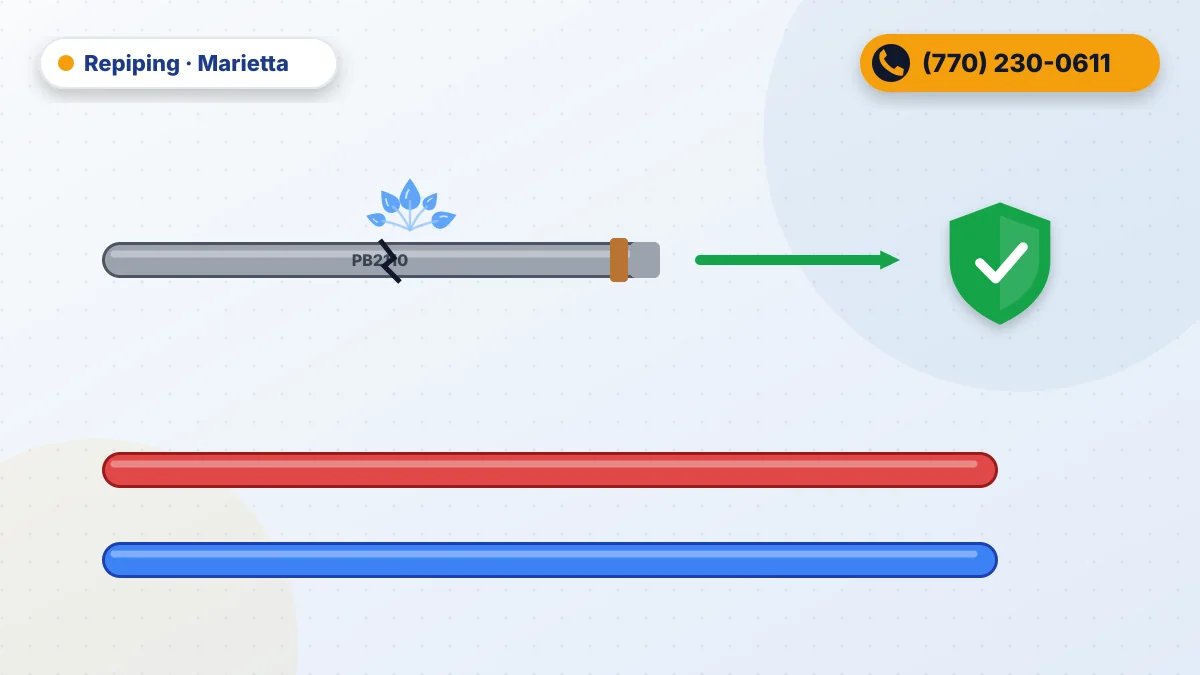
Repiping is part of our Marietta, GA plumbing services. Our plumbers replace whole systems or single failing sections, based on the condition of the pipe.
When Does a Home Need Repiping?
A home needs repiping when its supply pipes leak repeatedly, carry discolored water, lose pressure, or are made of a material known to fail, such as polybutylene. These 6 signs point to a repipe:
- Leaks appear in different spots within months of each other.
- The home has polybutylene or galvanized steel supply pipe.
- Hot or cold water runs rusty, brown or cloudy.
- Water pressure drops at 2 or more fixtures.
- Exposed pipes show corrosion, flaking or bulges.
- Frozen pipes split in the same lines each winter.
Repeated leaks are the clearest sign. Each leak repair fixes one spot while the rest of the pipe keeps aging.
What Is Polybutylene Pipe and Why Does It Fail?
Polybutylene (PB) is a plastic water supply pipe installed in US homes from 1978 to 1995. Oxidants such as chlorine in public water make PB brittle until it cracks. The pipe deteriorates from the inside, so leaks start without visible warning.
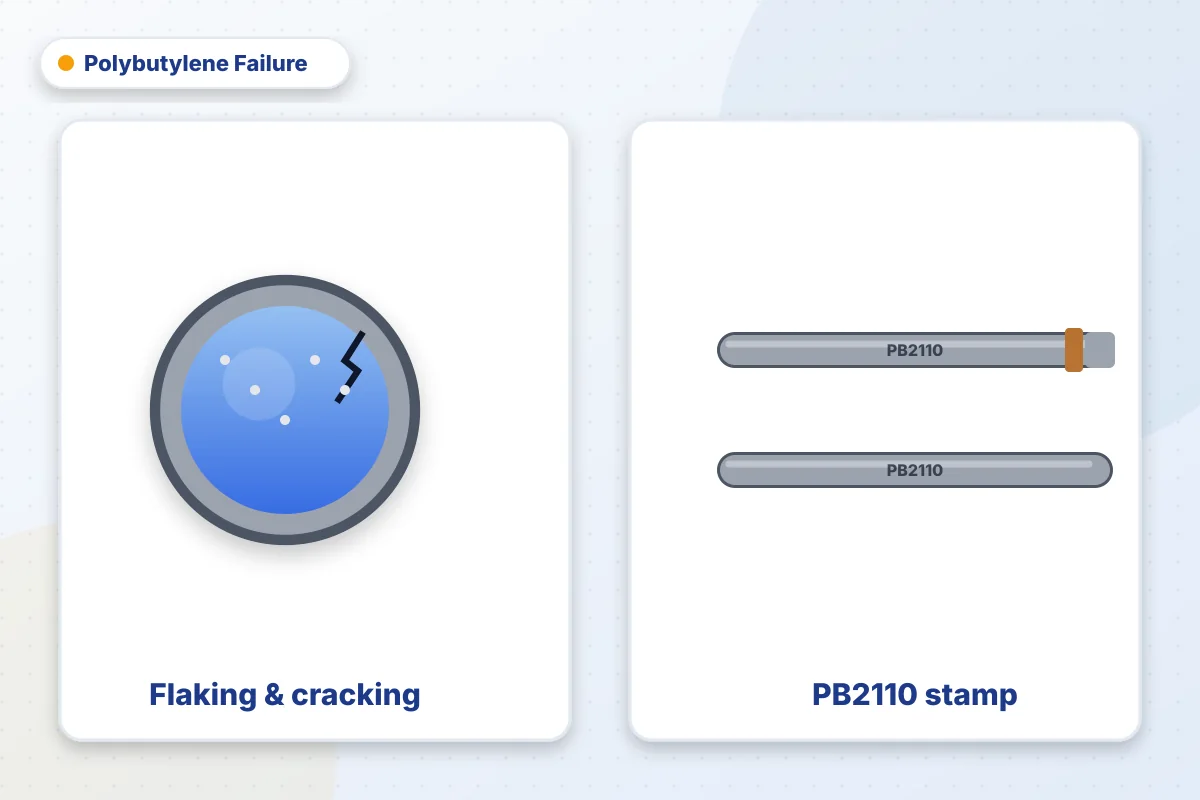
Polybutylene failure produced major class action lawsuits. In 1995, the Cox v. Shell Oil settlement committed $950 million for PB plumbing installed between January 1, 1978 and July 31, 1995. The claim period for that settlement has closed, so replacement today is the homeowner’s cost.
Marietta and East Cobb neighborhoods built from 1978 to 1995 fall inside the PB installation period. Homes from those years need a pipe check.
How Do You Identify Polybutylene Pipe?
Identify polybutylene by its gray, blue or black flexible plastic body and the code “PB2110” stamped along the pipe. Check these 4 places:
- Where the water line enters the home
- At the water heater connections
- Under sinks and behind toilets at the supply stop valves
- In the crawl space, attic or unfinished basement
Blue PB often serves as the underground service line from the meter. Gray PB usually runs inside the home. Our guide Polybutylene Pipes: Identification, Risks and Replacement covers identification with photos.
Why Does Galvanized Steel Pipe Need Replacement?
Galvanized steel pipe needs replacement because it corrodes on the inside, which narrows the pipe, lowers water pressure and causes rusty water and leaks. Galvanized pipe is steel coated with zinc, and the coating wears away with age.
Corrosion buildup inside galvanized pipe is a common cause of low pressure in older homes. Read Low Water Pressure Causes and Fixes for other causes.
Which Pipe Material Is Best for Repiping?
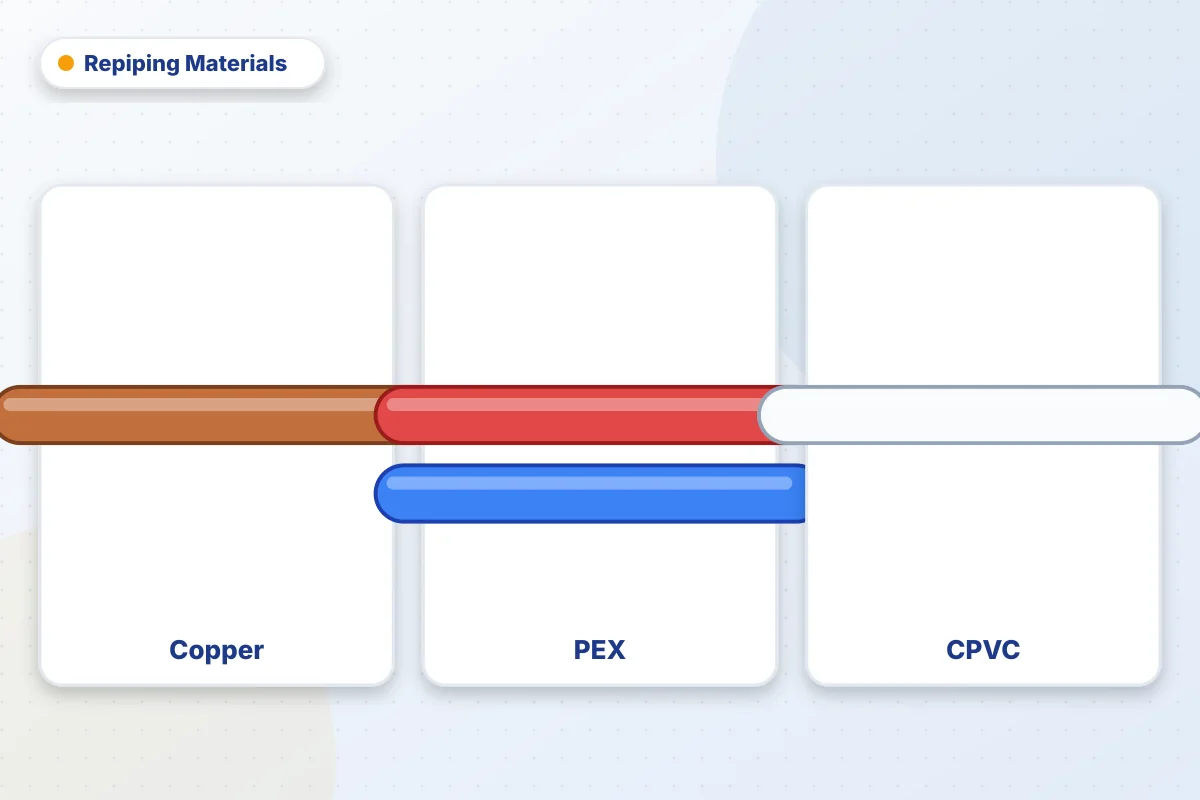
PEX, copper and CPVC are the 3 common repiping materials, and PEX is the most common choice for whole-house repipes because it is flexible and needs fewer fittings. Each material fits different homes and budgets.
| Material | What it is | Strengths | Limits |
|---|---|---|---|
| PEX | Cross-linked polyethylene, a flexible plastic tube | Bends around corners, fewer joints, quick install | Not for direct sunlight exposure |
| Copper | Rigid metal pipe joined by soldering or press fittings | Long track record, heat resistant | Higher material cost, more fittings |
| CPVC | Chlorinated polyvinyl chloride, a rigid plastic pipe | Lower cost, handles hot water | Rigid, more joints than PEX |
The plumber recommends a material after checking the home’s layout, water quality and budget.
How Does a Whole-House Repipe Work?
A whole-house repipe works in 7 steps: inspection, plan and price, home protection, new line installation, fixture connection, pressure testing and wall patching.
- Inspect. The plumber identifies pipe material, layout and access points.
- Plan and price. The plumber maps new pipe routes and gives a written price.
- Protect the home. Crews cover floors and furniture near the work areas.
- Install new lines. The plumber runs new supply lines through small wall and ceiling openings, the attic or the crawl space.
- Connect fixtures. Each faucet, toilet, appliance and the water heater connects to the new system.
- Pressure test. The plumber tests the full system for leaks before closing walls.
- Patch and inspect. Openings are patched, and the work passes any required Cobb County or City of Marietta inspection.
Homes with a crawl space allow faster repipes because most lines run under the floor.
How Long Does a Whole-House Repipe Take?
A whole-house repipe takes 2 to 5 days for most single-family homes, depending on home size, pipe access and the number of fixtures. Water stays on each night in most projects.
The timeline depends on 4 factors:
- Number of bathrooms and fixtures
- Crawl space, slab or basement foundation
- Number of stories
- Wall and ceiling finishes that need patching
Pipe Guides for Marietta Homeowners
Old pipe often fails first during cold weather. Read about frozen pipe repair in Marietta. A single hidden leak in sound pipe needs leak detection and repair in Marietta, not a full repipe.
Frequently Asked Questions
What years was polybutylene pipe installed?
Polybutylene pipe was installed in US homes from 1978 to 1995. The Cox v. Shell Oil settlement covered PB plumbing installed between January 1, 1978 and July 31, 1995.
Can I still file a polybutylene class action claim?
No. The claim period for the Cox v. Shell Oil settlement has closed, so polybutylene replacement today is paid by the homeowner.
How do I know if I have polybutylene pipes?
Look for gray, blue or black flexible plastic pipe stamped “PB2110” near the water heater, under sinks, at the water entry point or in the crawl space.
Is PEX good for repiping a house?
Yes. PEX is a flexible plastic tube that bends around corners and needs fewer fittings, which makes it the most common whole-house repipe material.
Do I have to move out during a repipe?
Most homeowners stay home during a repipe. Water is shut off during work hours and restored each night in most projects.
Book Repiping in Marietta, GA
Polybutylene, galvanized pipe or repeat leaks? Call (770) 230-0611. Plumber Marietta GA repipes homes across Marietta, East Cobb, Kennesaw, Smyrna, Roswell, Acworth and Vinings.