
Thaw a frozen pipe by opening the faucet, finding the frozen section and applying gentle heat until full water pressure returns. Safe heat sources include a hair dryer, heating pad, space heater or hot wet towels. Never use an open flame, according to the American Red Cross.
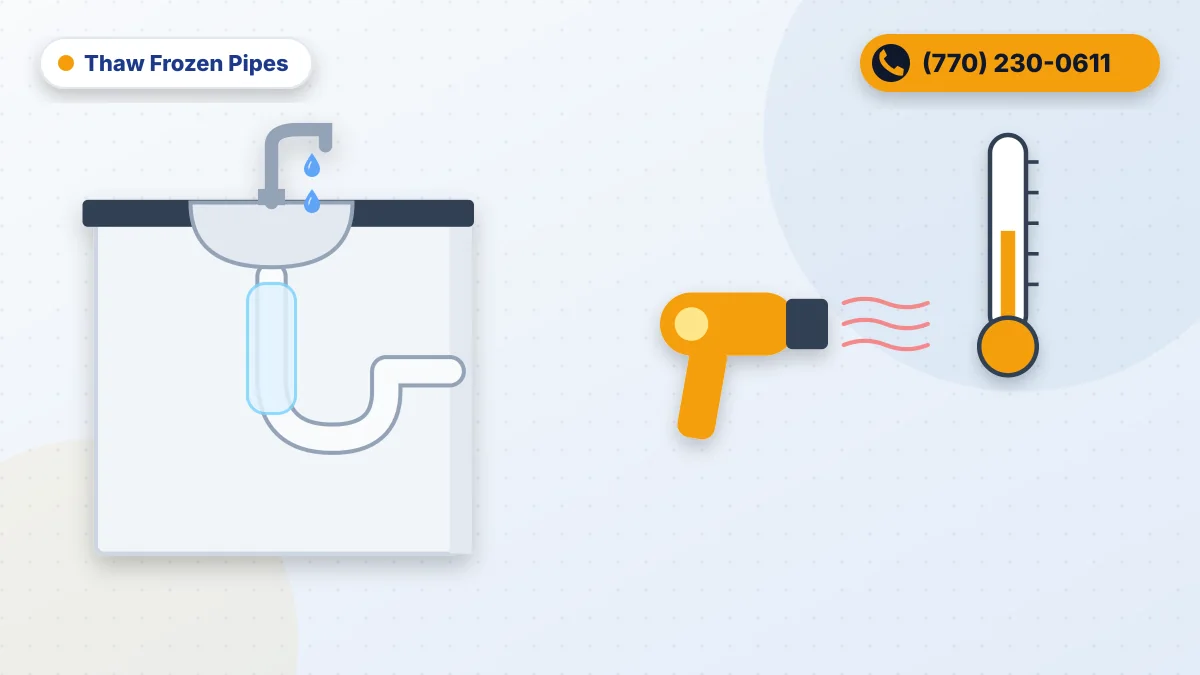
A frozen pipe is a water line blocked by ice after temperatures drop below 32°F. The first sign is a faucet that gives only a trickle or no water during freezing weather. Pipes in crawl spaces, attics, garages and exterior walls freeze first. A pipe that splits or does not thaw needs professional frozen pipe repair in Marietta.
What Do You Check Before Thawing a Frozen Pipe?
Check the frozen pipe for cracks, bulges or water before applying heat, and shut off the main water valve if the pipe has split. Ice expands inside a pipe and splits the pipe wall. The leak starts as soon as the ice melts.
Look for these 3 signs of a split pipe:
- A crack or a bulge along the pipe
- Water dripping or pooling near the pipe
- Wet drywall or a stain on a ceiling below the pipe
A split pipe needs the main water valve closed before any thawing. Read what to do in a plumbing emergency before the plumber arrives.
How Do You Find the Frozen Section of a Pipe?
Find the frozen section by opening each faucet in the home and tracing the pipe that feeds the faucet with no flow back toward the water entry point. The frozen section sits in the coldest stretch of that pipe.
Frozen sections sit in these 5 places:
- Crawl spaces. Pipes under the floor in an unheated crawl space.
- Exterior walls. Pipes running behind a north-facing or outside wall.
- Attics. Supply lines running through uninsulated attics.
- Garages. Pipes along garage walls or ceilings.
- Outdoor hose bibs. The spigot and the pipe just inside the wall.
Frost on the pipe surface marks the frozen spot. The American Red Cross also advises checking every other faucet in the home, because other pipes freeze in the same cold snap.
How Do You Thaw a Frozen Pipe in 6 Steps?
Thaw a frozen pipe in 6 steps: open the faucet, start heat near the faucet end, apply gentle heat, keep the water running, restore full pressure, and check every faucet.
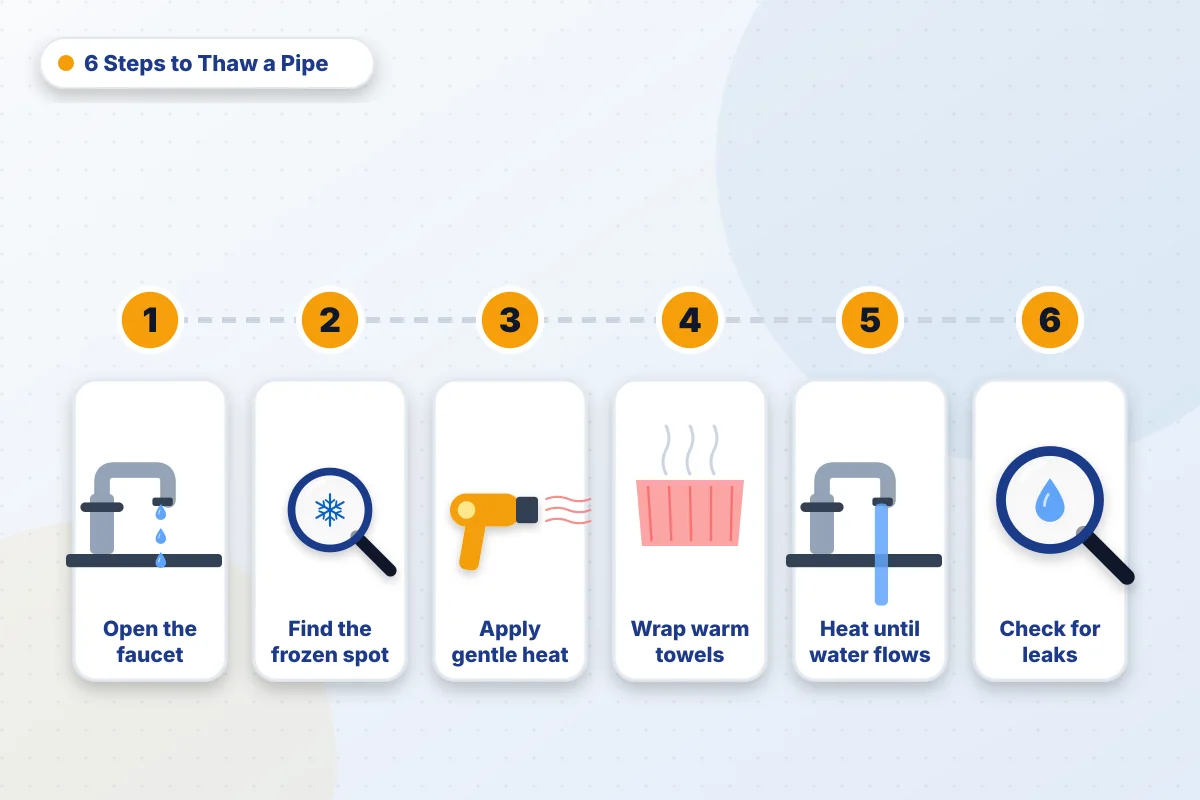
- Open the faucet. Open the hot and cold taps on the faucet fed by the frozen pipe. Melting water and steam escape through the open faucet.
- Start near the faucet. Heat the pipe from the faucet end and work toward the frozen section, so melted water drains out ahead of the ice.
- Apply gentle heat. Use an electric heating pad, an electric hair dryer, a portable space heater or towels soaked in hot water.
- Keep water running. Running water through the pipe melts the remaining ice, according to the American Red Cross.
- Restore full pressure. Apply heat until full water pressure returns, as the American Red Cross directs.
- Check every faucet. Open the other faucets in the home to find any other frozen pipes.
Keep electrical devices away from standing water. Never leave a space heater running unattended.
What Is Safe to Use on a Frozen Pipe?
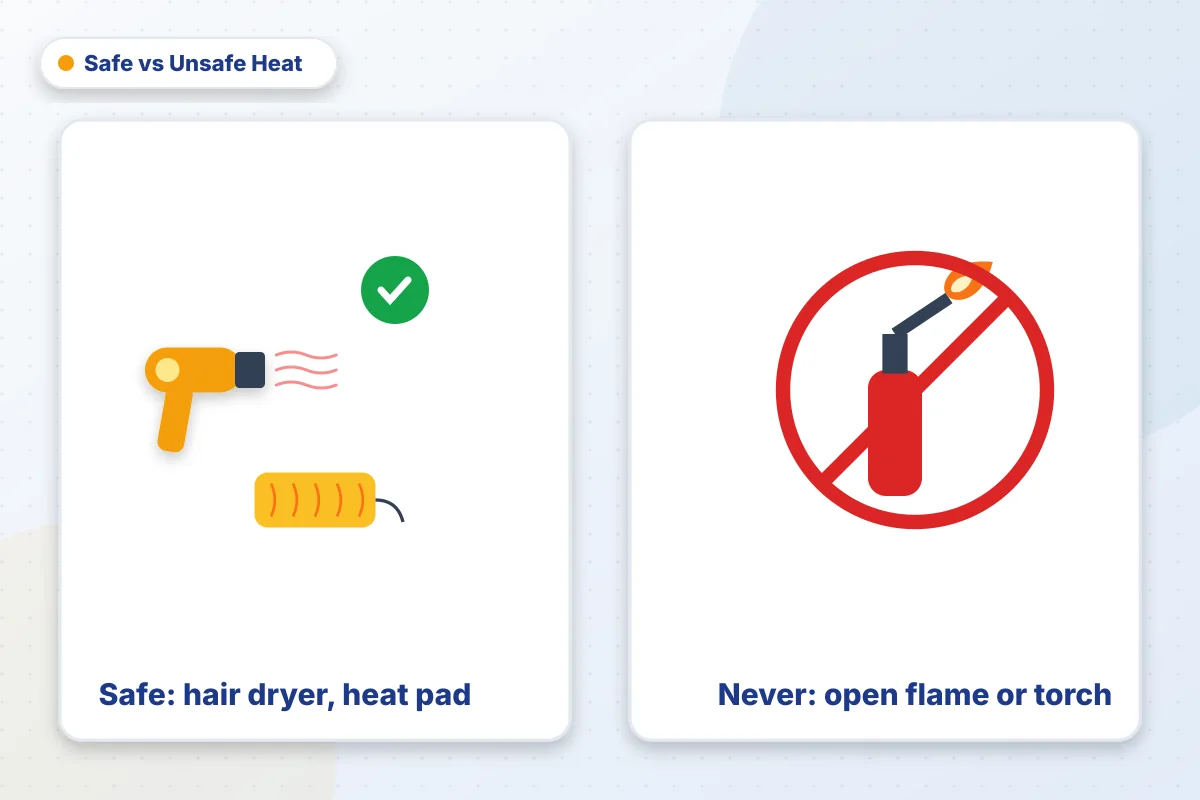
An electric heating pad, an electric hair dryer, a portable space heater and hot wet towels are safe heat sources for a frozen pipe. A blowtorch, a kerosene or propane heater, a charcoal stove and any open flame are unsafe.
| Safe heat sources (American Red Cross) | Unsafe heat sources (American Red Cross) |
|---|---|
| Electric heating pad wrapped around the pipe | Blowtorch |
| Electric hair dryer | Kerosene or propane heater |
| Portable space heater kept away from flammable materials | Charcoal stove |
| Towels soaked in hot water | Any other open-flame device |
Why Is a Torch Dangerous on a Frozen Pipe?
A torch heats the pipe so fast that water trapped behind the ice boils and the pipe explodes, according to the American Red Cross. An open flame also sets fire to wood framing and insulation, and fuel-burning heaters release carbon monoxide indoors.
How Do You Thaw a Pipe Inside a Wall?
Thaw a pipe inside a wall by raising the home’s heat and opening cabinet doors so warm air reaches the plumbing. A space heater aimed at the wall, kept a safe distance from furniture and curtains, adds warmth to the cold stretch.
A pipe inside a wall that stays frozen after these steps needs a plumber. Cutting into drywall without knowing the pipe location risks hitting wiring or a gas line.
What Do You Do After the Pipe Thaws?
After the pipe thaws, check the pipe and the area around it for drips over the next few days. A pipe that did not burst can still crack at a fitting.
- Look for drips at joints, fittings and valves.
- Watch the water meter with all fixtures off. A moving meter points to a hidden leak. Our guide to tracking down a leak behind walls and floors shows each check.
- Insulate the pipe with foam pipe sleeves before the next cold snap.
When Do You Call a Plumber for a Frozen Pipe?
Call a licensed plumber when the frozen area cannot be found, cannot be reached, or does not thaw, as the American Red Cross advises. Call right away when the pipe has split or water is leaking.
| Situation | Action |
|---|---|
| Faucet trickles, pipe is reachable and dry | Thaw it with gentle heat |
| Frozen section cannot be found | Call a plumber |
| Pipe inside a wall or ceiling | Call a plumber |
| Pipe cracked, bulged or leaking | Shut off the main valve, then call a plumber |
Related Winter Plumbing Guides
- steps to keep Cobb County pipes from freezing
- Call our 24/7 plumbers serving Marietta, GA when a pipe will not thaw or has split.
Frequently Asked Questions
How long does it take to thaw a frozen pipe?
Thawing time depends on the length of the frozen section, the pipe material and the heat source. Keep heat on the pipe until full water pressure returns.
Can a frozen pipe thaw on its own?
Yes, a frozen pipe thaws on its own once temperatures rise above 32°F. Slow thawing leaves the risk of a hidden split pipe, so check for leaks as the water returns.
Does the faucet stay open when thawing a pipe?
Yes. Keep the faucet open while thawing. The open faucet lets melted water flow out and relieves pressure in the pipe.
Can I use a hair dryer to thaw a frozen pipe?
Yes. The American Red Cross lists an electric hair dryer as a safe heat source. Keep it away from standing water.
What happens if a frozen pipe bursts?
A burst pipe leaks as soon as the ice melts. Shut off the main water valve and call a plumber.
Frozen Pipe in Marietta? Call a Plumber
Pipe won’t thaw, or water is leaking? Call (770) 230-0611. Plumber Marietta GA thaws frozen lines safely and repairs burst pipes, 24/7.