
A water heater pops or rumbles because mineral sediment at the bottom of the tank traps water, and the burner or element heats that water into steam bubbles that pop. Flushing the tank removes the sediment and stops the noise in most heaters.
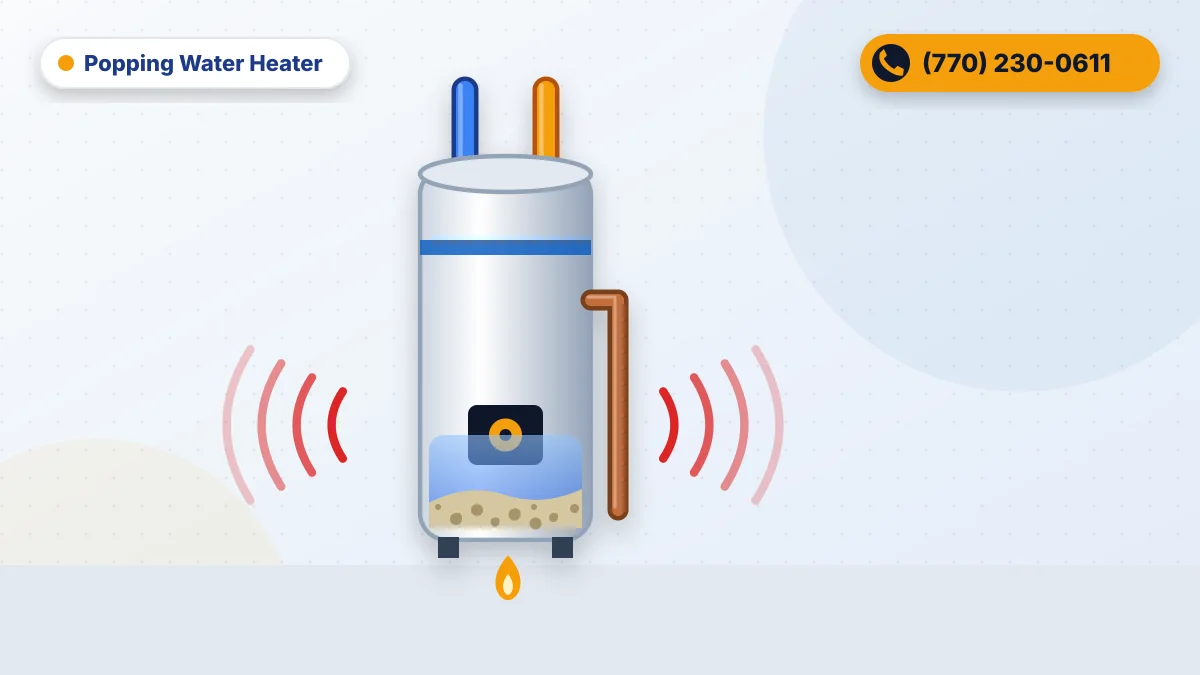
Water heater sediment is a layer of calcium and magnesium minerals that settles out of heated water and collects at the bottom of the tank. The layer grows each year a tank goes without a flush. A heater that keeps rumbling after a flush needs a diagnosis from our water heater repair specialists in Marietta.
Why Does Sediment Build Up in a Water Heater?
Sediment builds up because heating water drops dissolved calcium and magnesium out of solution, and the minerals sink to the bottom of the tank. Hard water carries more of these minerals, so sediment forms faster in homes with hard water.
Read how mineral-rich water affects Marietta pipes and water heaters.
Is a Popping Water Heater Dangerous?
A popping water heater is not an immediate danger, but the sediment behind the noise wastes energy and wears out the tank. The sediment layer insulates the water from the heat source, so the burner or element runs longer.
Sediment causes 4 problems:
- Wasted energy. The heat source runs longer to warm the same water.
- Slower heating. Hot water takes longer to recover after use.
- Overheated tank bottom. Trapped heat stresses the steel and the glass lining.
- Shorter tank life. Stress and corrosion lead to leaks at the tank base.
A noise paired with water from the T&P relief valve or water at the tank base is a warning sign. Shut off the heater and call a plumber.
What Do Other Water Heater Noises Mean?
Each water heater noise points to a different cause: popping means sediment, ticking means expanding pipes, and screeching means restricted flow.
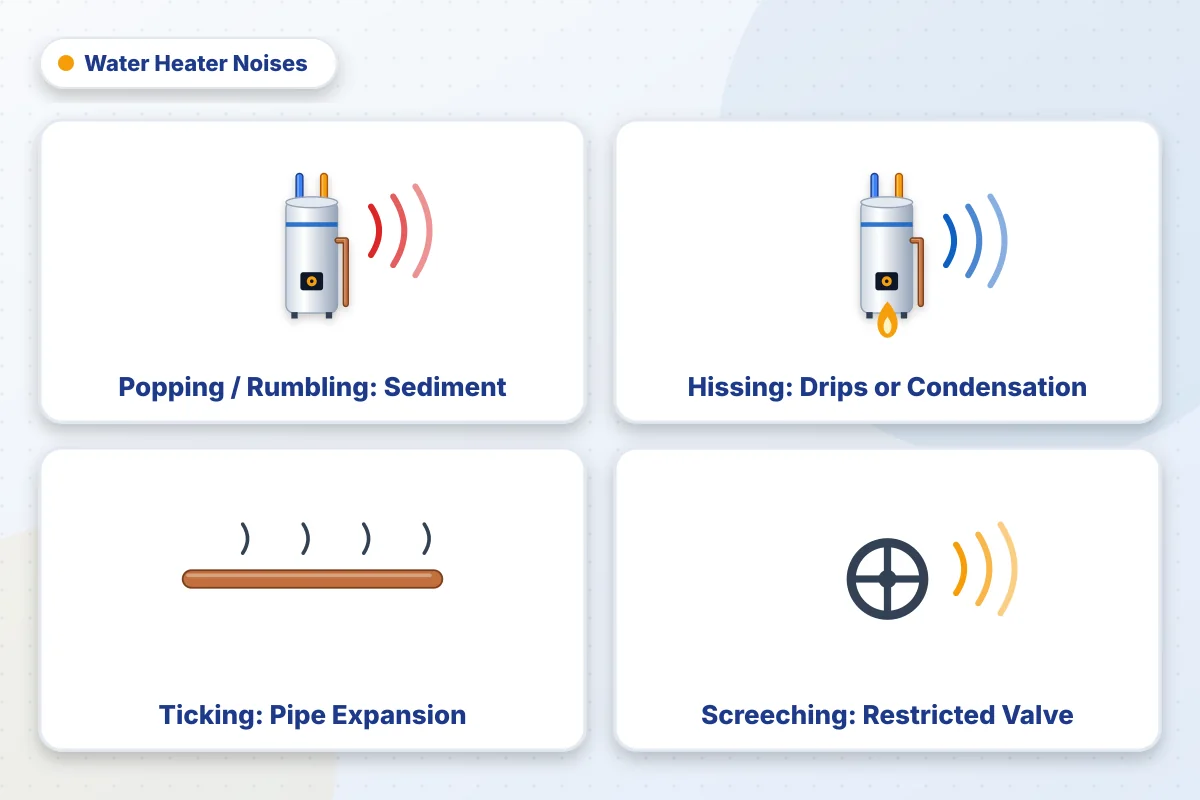
| Noise | Likely cause | Action |
|---|---|---|
| Popping or rumbling | Sediment at the tank bottom | Flush the tank |
| Crackling or sizzling (gas) | Condensation or a leak dripping on the burner | Check for a leak at the tank |
| Sizzling (electric) | Sediment covering the lower element | Flush the tank, check the element |
| Ticking or tapping | Pipes expanding and contracting, heat trap fittings | Usually harmless |
| Humming (electric) | A loose heating element | Tighten or replace the element |
| Screeching or whistling | Partially closed valve or restricted flow | Open the valve fully, check the inlet |
| Hissing or loud discharge | T&P relief valve releasing pressure | Shut off the heater, call a plumber |
How Do You Flush a Water Heater to Stop Popping?
Flush a water heater by turning off the heat source, shutting the cold water supply, draining the tank through the drain valve, and refilling it. The 7 steps below apply to most tank water heaters.
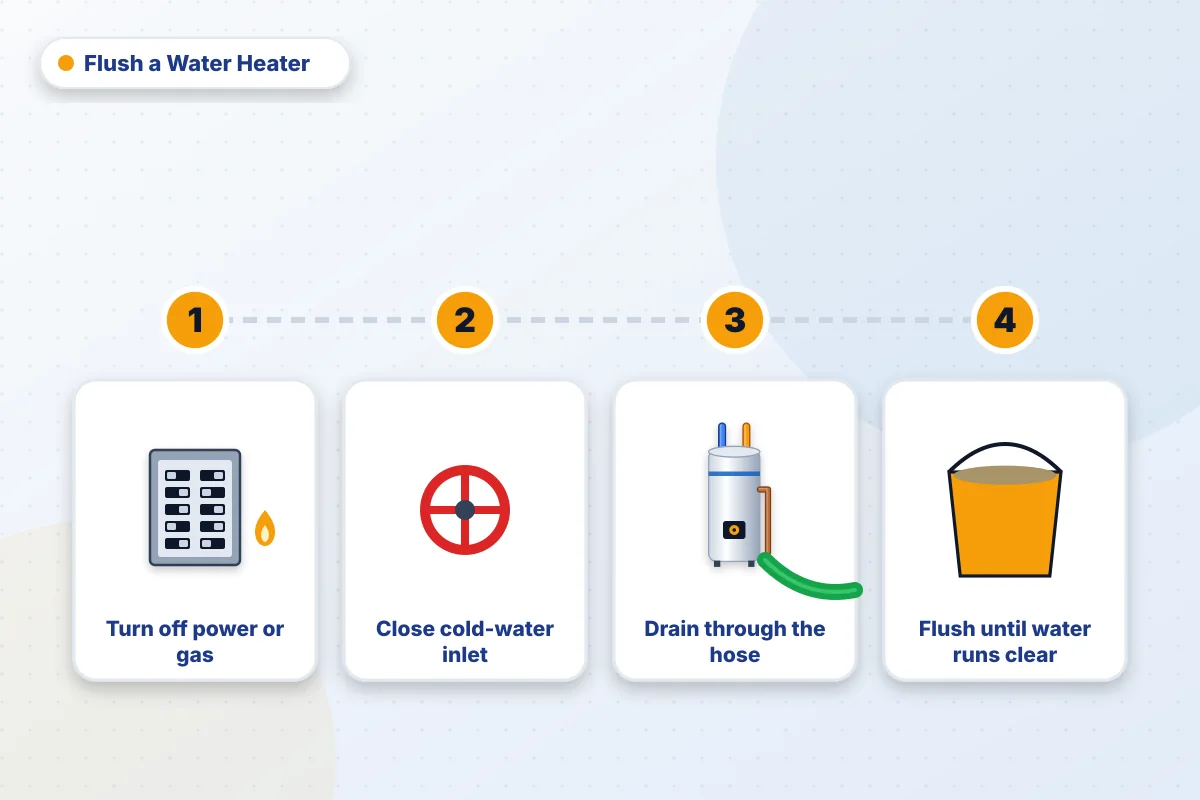
- Turn off the heat. Set a gas heater to “pilot” or “off.” Switch off the breaker for an electric heater.
- Let the water cool. Tank water is hot enough to scald.
- Close the cold water supply. The valve sits on the pipe entering the top of the tank.
- Connect a hose. Attach a garden hose to the drain valve and run it to a floor drain or outside.
- Open a hot water faucet. Air entering the system lets the tank drain.
- Drain and rinse. Open the drain valve, drain the tank, then open the cold supply briefly to stir and rinse out sediment.
- Refill before heating. Close the drain valve, refill the tank until water runs from the hot faucet, then restore the heat.
Never switch on an electric heater with an empty tank. The element burns out without water around it.
Does Flushing Always Stop the Noise?
No. Flushing stops the noise when the sediment is loose, but hardened scale stays in the tank. A tank with years of hardened buildup keeps rumbling after a flush. A clogged drain valve also blocks the sediment from leaving.
How Do You Prevent Water Heater Sediment?
Prevent water heater sediment by flushing the tank once a year and treating hard water before it reaches the heater.
- Flush yearly. A yearly flush removes loose sediment before it hardens.
- Check the anode rod. A worn anode rod speeds tank corrosion.
- Treat hard water. A water softener reduces the minerals that form sediment.
- Keep the temperature moderate. A lower setting slows mineral drop-out.
When Do You Call a Plumber for a Noisy Water Heater?
Call a plumber when the noise continues after a flush, the T&P valve discharges, water appears at the tank base, or the heater is 10 years old or older.
| Situation | What it means |
|---|---|
| Noise continues after a flush | Hardened scale or a failing element |
| T&P valve hisses or discharges | Excess pressure or temperature |
| Water at the tank base | Possible tank leak |
| Heater 10+ years old and rumbling | Near the end of its service life |
An old, rumbling tank often costs more to keep than to replace. Our guide on whether to fix or replace an aging water heater walks through the decision. Water at the base calls for finding the source of a water heater leak.
Related Water Heater Guides
Frequently Asked Questions
Why does my water heater make a popping sound?
Sediment at the bottom of the tank traps water, and heat turns that water into steam bubbles that pop.
Is it safe to use a water heater that is popping?
Yes, popping alone is not an immediate danger. Flush the tank soon, because sediment wastes energy and shortens tank life.
How often do you flush a water heater?
Flush a tank water heater once a year. Homes with hard water benefit from more frequent flushing.
Why does my water heater rumble after flushing?
Hardened scale stays in the tank after a flush and keeps rumbling. A plumber descales the tank or recommends replacement.
What does a hissing water heater mean?
Hissing points to water on the gas burner or the T&P valve releasing pressure. A discharging T&P valve calls for a plumber.
Noisy Water Heater in Marietta?
Rumbling, popping or hissing that keeps coming back? Call (770) 230-0611. Plumber Marietta GA flushes, repairs and replaces water heaters across Marietta.