
Low water pressure comes from 7 causes: clogged aerators, a partly closed valve, a failing pressure regulator, corroded pipes, a hidden leak, the water heater or the utility. Where the low pressure appears points to the cause.
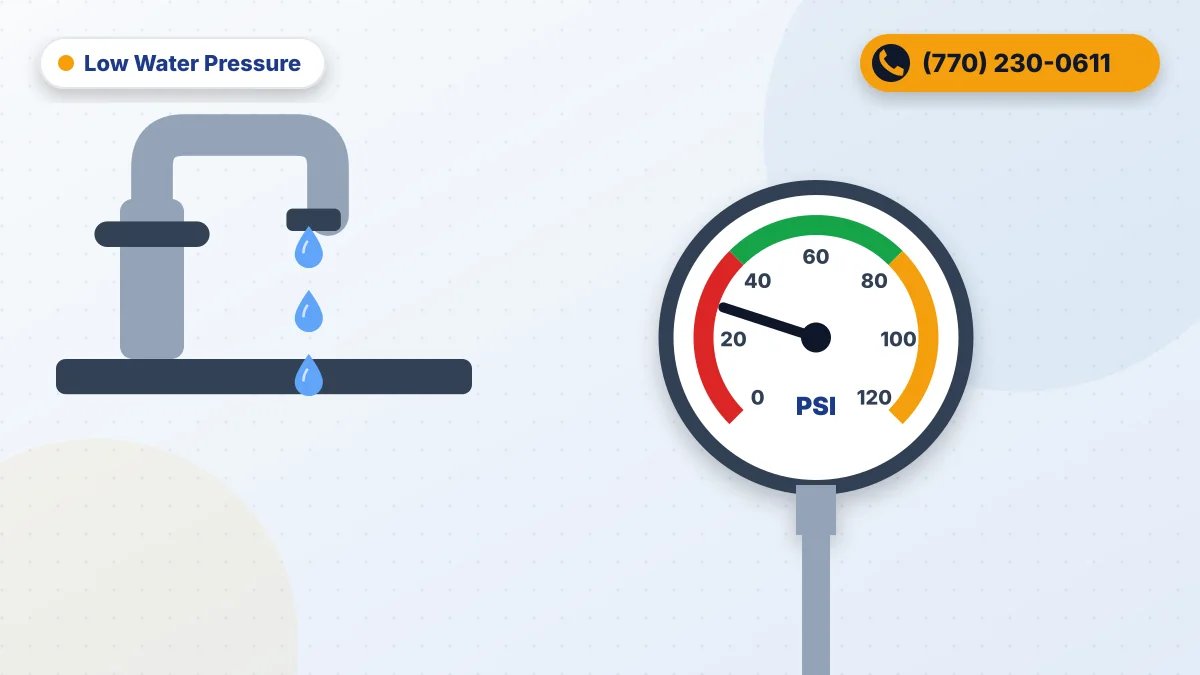
Water pressure is the force that pushes water through the pipes, measured in pounds per square inch (psi). Low pressure shows up as weak showers, slow-filling toilets and faucets that sputter. Corroded supply pipes are the most expensive cause, and our whole-house repiping service in Marietta replaces them.
How Do You Test Your Home’s Water Pressure?
Test water pressure with a pressure gauge screwed onto an outdoor hose bib, with every faucet and appliance in the home turned off. The gauge shows the static pressure in psi.
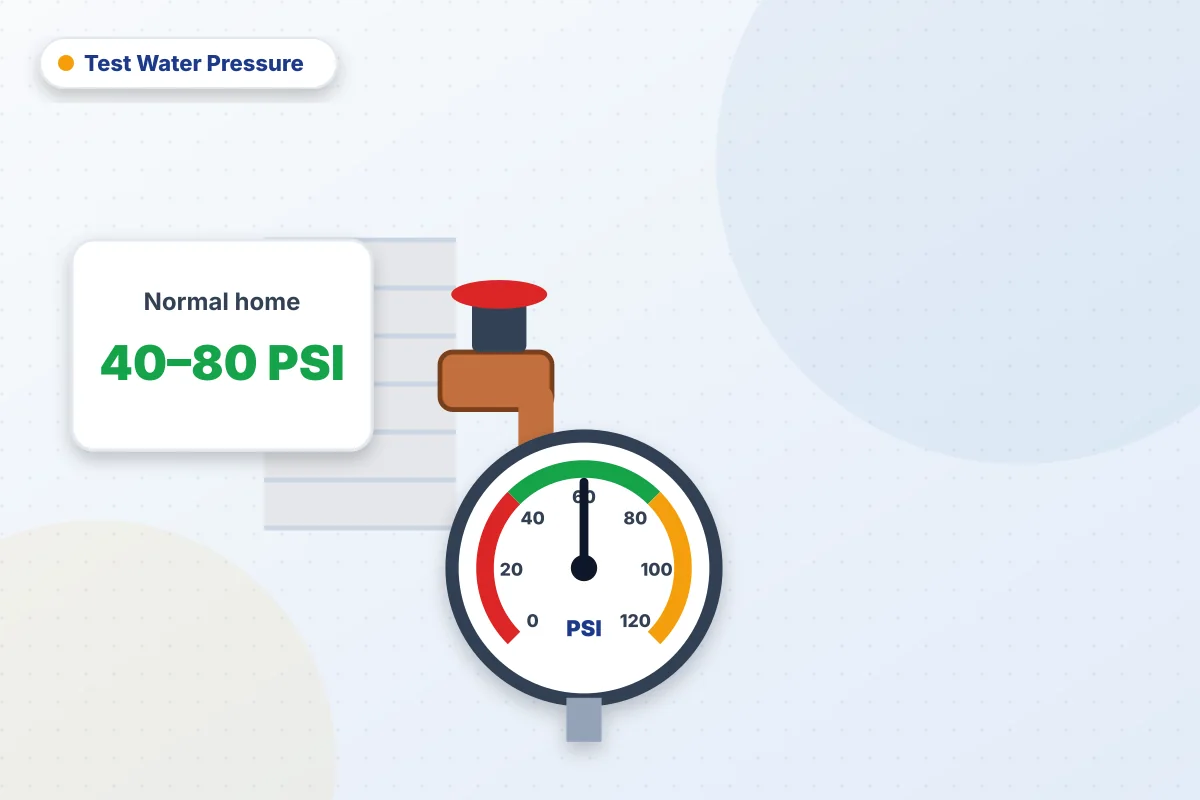
The International Plumbing Code, which Georgia adopts as its state plumbing code, requires a pressure-reducing valve when static pressure exceeds 80 psi. A reading far below the pressure the home normally gets confirms a pressure problem rather than a single clogged fixture.
Is the Low Pressure at One Fixture or the Whole House?
Low pressure at one fixture points to that fixture, and low pressure at every fixture points to the main line, a valve, a regulator, the pipes or the utility.
| Where pressure is low | Likely cause |
|---|---|
| One faucet or showerhead | Clogged aerator, showerhead or fixture cartridge |
| Hot water only | Water heater shutoff valve, sediment or outlet problem |
| Every fixture in the home | Main valve, pressure-reducing valve, corroded pipes or leak |
| Every home on the street | Utility work or a main break |
What Causes Low Water Pressure and How Do You Fix Each?
Each cause has its own fix, from cleaning an aerator in minutes to replacing corroded pipe. Work through the 7 causes in order, simplest first.
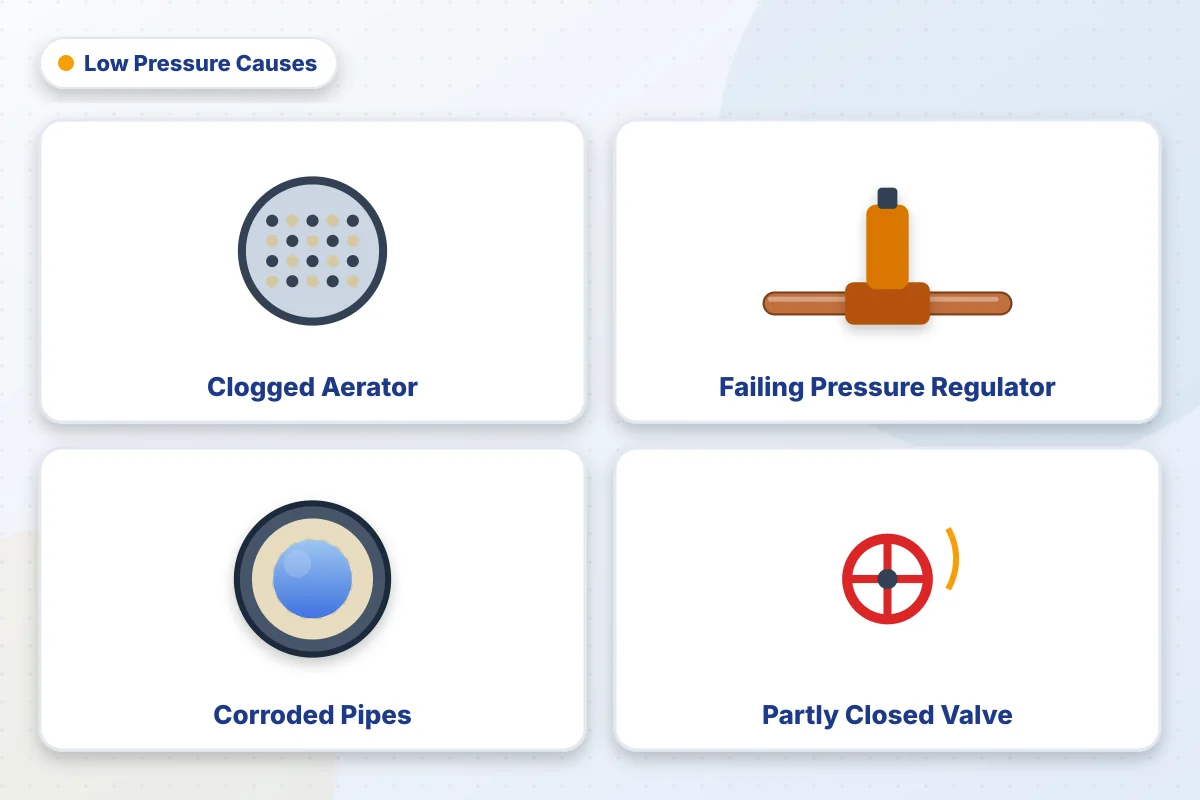
- Clogged aerator or showerhead. Minerals collect in the screen at the faucet tip and in showerhead holes. Unscrew and soak the part in vinegar, then rinse.
- Partly closed main shutoff or meter valve. A valve left partly closed after a repair restricts flow to the whole house. Open the main shutoff fully.
- Failing pressure-reducing valve. A worn PRV drops pressure below its setting. A plumber adjusts or replaces the valve.
- Corroded galvanized pipes. Rust builds inside galvanized steel pipe and narrows the flow path. Replacement with PEX or copper is the fix.
- Hidden leak. Water escaping through a leak lowers pressure at the fixtures. Check the meter with all fixtures off.
- Water heater problem. Low pressure on the hot side only points to the heater’s shutoff valve, sediment or the hot outlet.
- Utility-side issue. Main breaks, flushing and repairs lower pressure for the whole street.
Does Hard Water Cause Low Water Pressure?
Yes. Hard water leaves mineral scale in aerators, showerheads and pipes, and the scale narrows the flow path. Cleaning fixtures restores flow at the tap. Learn how mineral content in Marietta water builds scale.
How Does a Hidden Leak Lower Water Pressure?
A hidden leak sends part of the water supply out of the system before it reaches the fixtures. A water meter that moves with every fixture off confirms a leak. Our hidden leak detection guide walks through each check, and our Marietta leak location and repair service pinpoints leaks inside walls and slabs.
When Is the Water Utility the Cause?
The water utility is the cause when neighbors also have low pressure, or when pressure drops during street work or a main break. Call the utility on your bill before calling a plumber.
| Utility | Phone |
|---|---|
| Marietta Power & Water | 770-794-5150 |
| Cobb County Water System | 770-423-1000 |
Our guide on which Marietta-area utility to call for a water problem shows who serves each area.
When Is Repiping the Fix for Low Water Pressure?
Repiping is the fix when corroded galvanized steel pipe restricts flow throughout the home. Galvanized pipe rusts from the inside, and no cleaning reverses the buildup.
Signs of corroded galvanized supply pipe:
- Low pressure at every fixture that keeps dropping over time
- Rust-colored water after the water sits overnight
- Gray, threaded steel pipes visible near the water heater or under sinks
Related Plumbing Guides
Frequently Asked Questions
Why is my water pressure suddenly low?
Sudden low pressure points to utility work, a main break, a partly closed valve or a new leak. Check with neighbors and the utility first.
What is normal water pressure for a house?
The plumbing code requires a pressure-reducing valve above 80 psi static pressure. Homes run below that limit, and a sudden drop from the home’s normal reading signals a problem.
Why is only my hot water pressure low?
Low hot water pressure points to the water heater’s shutoff valve, sediment in the tank or a problem at the hot outlet.
Can a water softener cause low water pressure?
Yes. A clogged or undersized water softener restricts flow to the whole house. Bypass the softener to test.
Who fixes low water pressure, the plumber or the city?
The utility fixes pressure problems on the street side of the meter. A plumber fixes problems inside the home.
Low Water Pressure in Marietta?
Weak showers and slow faucets? Call (770) 230-0611. Plumber Marietta GA tests your pressure, finds the cause and fixes it.