
Red clay soil causes sewer line problems in Cobb County because it holds water, settles unevenly in pipe trenches and, in some soil types, swells and shrinks with moisture. The movement creates sags, offset joints and cracks in buried sewer pipe.
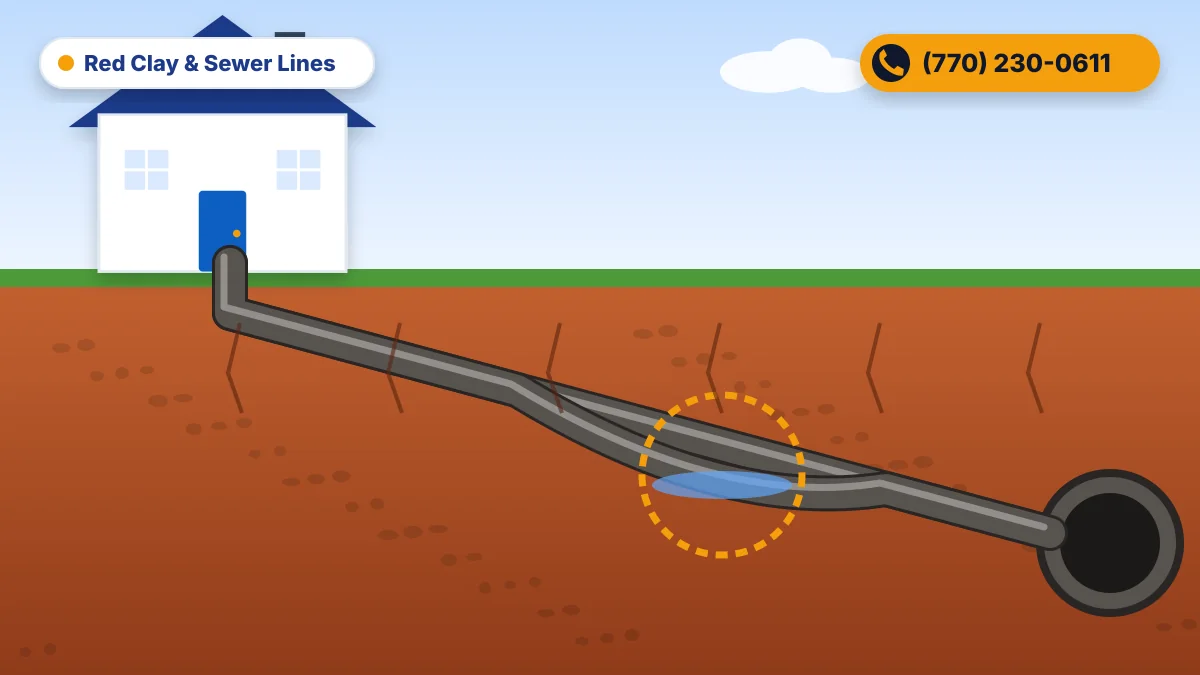
Georgia red clay is the iron-rich clay subsoil of the Piedmont region, which includes Cobb County. The red color comes from iron oxides. A sewer line buried in this soil sits in a dense, slow-draining material. Our Marietta sewer camera and repair team diagnoses clay-related sewer damage across Cobb County.
What Is Georgia Red Clay Soil?
Georgia red clay is a fine, iron-rich clay subsoil found across the Piedmont, typified by the Cecil soil series. The USDA classifies Cecil soil as “fine, kaolinitic,” meaning its clay is mostly the mineral kaolinite.
Red clay has 3 traits that matter for buried pipe:
- Dense texture. Fine clay particles pack tightly.
- Slow drainage. Water moves slowly through clay and lingers around pipes.
- Variable movement. Some clay soils change volume as moisture changes.
Does All Red Clay Swell and Shrink?
No. Cecil, the classic Georgia red clay, has a low shrink-swell potential. Other Piedmont soils, such as the Helena and Sedgefield series, rate high, according to USDA soil series descriptions.
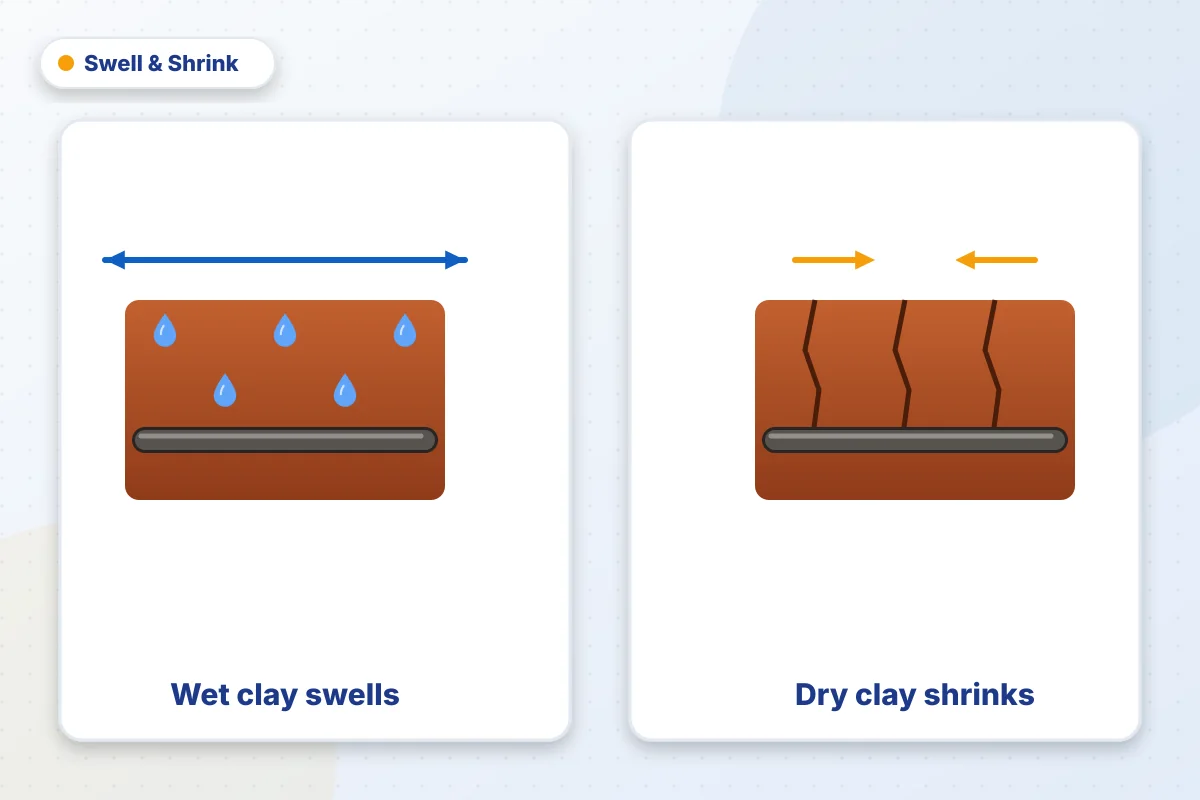
Shrink-swell is the change in soil volume as moisture changes. The Georgia Soil and Water Conservation Commission notes that shrinking and swelling damages foundations, roads and other structures, and that the rating applies to pipelines. Soil type changes from lot to lot, so 2 homes on the same street sit on different soils.
| Soil series | Shrink-swell potential | Source |
|---|---|---|
| Cecil (classic red clay) | Low | USDA NRCS |
| Shoulderbone | Low | USDA NRCS |
| Hard Labor | Low | USDA NRCS |
| Helena | High | USDA NRCS |
| Sedgefield | High | USDA NRCS |
Check the soil under your home with the free USDA Web Soil Survey.
How Does Clay Soil Damage a Sewer Line?
Clay soil damages a sewer line through trench settlement, water saturation, soil movement and washout around existing cracks. These forces bend and shift the pipe over years.
| Clay effect | Sewer defect it causes |
|---|---|
| Uneven settlement of trench backfill | Belly (sag) where waste collects |
| Saturated, heavy clay after rain | Pressure on joints and older pipe |
| Shrink-swell movement in expansive soils | Offset joints and cracks |
| Soil washing into a broken pipe | Voids, sinkholes and pipe collapse |
| Gaps at shifted joints | Entry points for tree roots |
Opened joints let roots in. Read how tree roots invade sewer pipes.
What Is a Sewer Line Belly?
A sewer line belly is a sag in the pipe where the line dips below its proper slope and holds standing water and waste. Bellies form when the soil under the pipe settles. Solids collect in the low spot and cause repeated clogs.
What Are the Signs of Clay-Related Sewer Problems?
Signs of clay-related sewer problems include repeated clogs in the main line, slow drains after heavy rain, sewage odor and sunken or soggy spots in the yard.
- Main line clogs that return after cleaning
- Slower drains after heavy rain
- Gurgling toilets
- Sewage odor indoors or outdoors
- A sunken strip or soggy patch over the sewer line
A sewer camera confirms the cause. The camera shows bellies, offsets, cracks and their distance from the cleanout.
How Do You Fix Sewer Damage From Clay Soil?
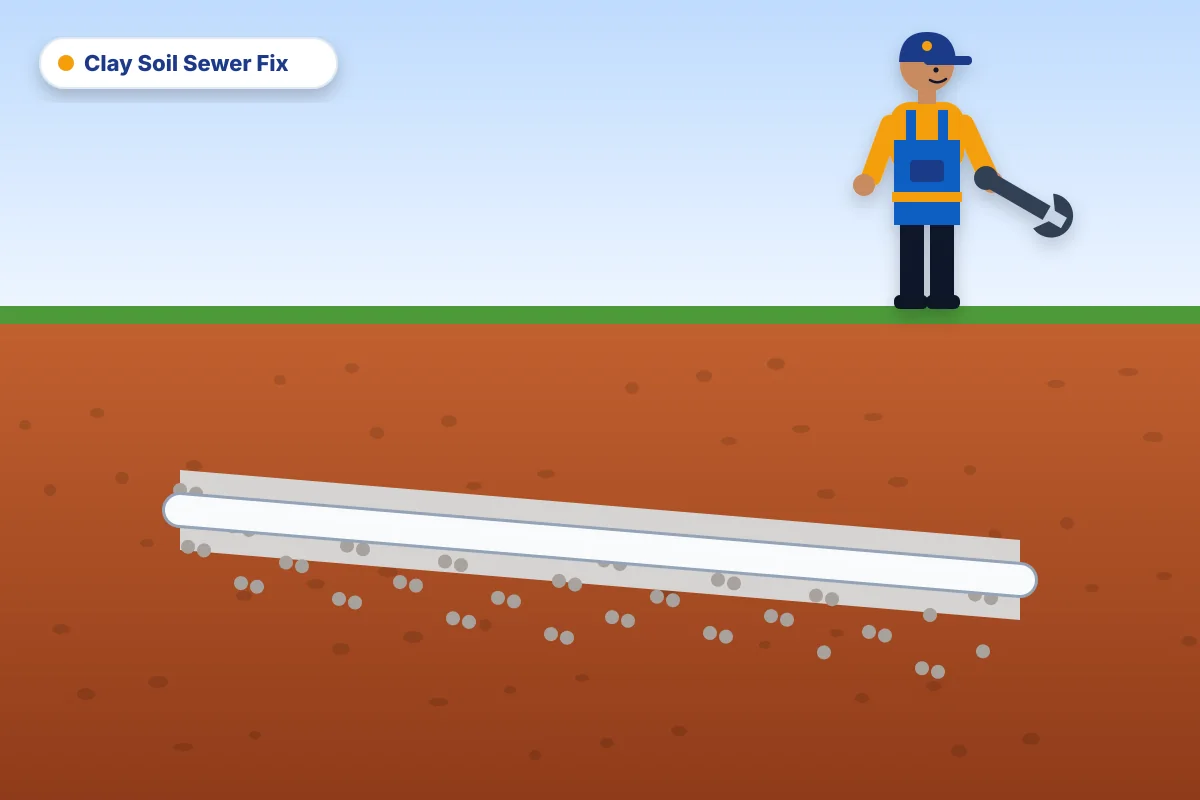
Fix clay-related sewer damage by replacing bellied or offset sections on a properly bedded base, or by lining cracked pipe that still holds its slope.
| Camera finding | Fix |
|---|---|
| Belly (sag) | Dig up, re-bed on compacted gravel, replace the section |
| Offset joint | Spot repair or pipe lining |
| Cracks on a pipe with good slope | Cured-in-place pipe (CIPP) lining |
| Collapse or crushed pipe | Section or full replacement |
Pipe lining follows the existing pipe shape, so a liner does not remove a belly. Bedding the pipe on compacted stone gives clay soil a stable base. See sewer replacement and lining prices per foot.
How Do You Protect a Sewer Line in Clay Soil?
Protect a sewer line in clay soil by directing roof and yard water away from the line, keeping trees away from it, and scheduling camera checks on older pipe.
- Manage surface water. Downspouts and grading move water away from the sewer route.
- Keep trees back. Roots follow moisture to clay-soaked joints.
- Inspect older lines. Clay, cast iron and Orangeburg pipe in older neighborhoods benefit from a camera check.
- Use proper bedding. New pipe sits on compacted gravel, not loose clay backfill.
Wet crawl spaces from the same slow-draining soil call for a sump pump for wet Marietta crawl spaces.
Related Sewer Guides
Frequently Asked Questions
Does red clay damage sewer pipes?
Yes. Red clay holds water, settles in trenches and, in expansive soil types, shifts pipe joints, which leads to sags, offsets and cracks.
Is Georgia red clay expansive?
Most classic Georgia red clay, such as the Cecil series, has a low shrink-swell potential. Some Piedmont soils, such as Helena and Sedgefield, rate high.
What causes a belly in a sewer line?
A belly forms when the soil under the pipe settles and the pipe dips below its proper slope.
Can pipe lining fix a sewer belly?
No. A liner follows the existing pipe shape, so the belly stays. A belly needs excavation and re-bedding.
How do I find out what soil is under my house?
Look up your address on the free USDA Web Soil Survey, which maps soil series and their shrink-swell ratings.
Sewer Problems in Cobb County Clay?
Clogs that keep coming back? Call (770) 230-0611. Plumber Marietta GA inspects your sewer line with a camera and repairs clay-related damage.